 Premier League
 Championship
 EFL One & Two
 Scottish Premiership
 WSL
 Champions League
 Europa League
 FA Cup
 Carabao Cup
 Arsenal News
 Aston Villa News
 Chelsea News
 Liverpool News
 Man City News
 Man Utd News
 Newcastle News
 Tottenham News
 Premiership Rugby
 URC
 Six Nations
 Nations Championship
 Bath
 Leicester Tigers
 Saracens
 Northampton Saints
 Harlequins
 Bristol Bears
 Leinster
 Munster
 Glasgow Warriors
 Cardiff
Premier League talking points: City punish Liverpool as Palace and Hull fight back
Manchester City took full advantage of Ryan Gravenberch’s dismissal to win at Anfield, Crystal Palace recovered from an early setback and Hull’s substitutes denied Everton victory.

Manchester City took full advantage of Ryan Gravenberch’s dismissal to win at Anfield, Crystal Palace recovered from an early setback and Hull’s substitutes denied Everton victory.
Sunday’s three Premier League matches produced 11 goals, two comebacks and plenty to consider beyond the scorelines. City’s perfect start continued, but Liverpool’s six shots on target offered a reminder of Gianluigi Donnarumma’s contribution before the visitors pulled away.
Elsewhere, Everton preserved their unbeaten record without making the most of their opportunities, while Nottingham Forest left Selhurst Park with a defeat their early lead had done little to suggest.
Here are five talking points from the afternoon.
1. City’s substitutes help turn a tight contest into a decisive win
The final score at Anfield was emphatic. The match had been much less straightforward before Gravenberch’s departure.
Liverpool and City were still level when the midfielder was dismissed in the 62nd minute. Within six minutes, Erling Haaland and Jérémy Doku had put the visitors firmly in control.
Doku’s contribution underlined the strength available from City’s bench. Introduced for Iliman Ndiaye in the 56th minute, he scored 12 minutes later from Elliot Anderson’s assist.
Josko Gvardiol then provided the pass for Rayan Cherki’s third, having replaced Nico O’Reilly shortly after Haaland’s opener.
Those changes gave City fresh attacking influence at precisely the point Liverpool had to reorganise. Their response to the extra man was swift enough to leave the hosts little opportunity to settle.
Donnarumma deserves his share of the credit, too. Six saves and a clean sheet were substantial contributions in a match Liverpool finished with more shots on target.
City now have six wins from six and a three-point lead over Arsenal. Liverpool’s first league defeat leaves them nine points behind the leaders.
2. Palace’s response matters as much as their finishing
Conceding after three minutes could have made this another difficult afternoon for Palace, who had started the day with four points from five matches.
Instead, they overturned Dan Ndoye’s opener before the interval and secured a win which changes the complexion of their start.
Daichi Kamada’s equaliser in the 41st minute was followed by Jefferson Lerma’s goal in first-half stoppage time. Yéremy Pino then gave Palace breathing space after the break.
The timing was important. Forest had held their advantage for most of the first half, only to enter the dressing room behind. Palace followed that turnaround with the next goal rather than allowing the visitors to regain momentum.
As our Palace–Forest match report details, the hosts won despite having less possession and considerably fewer attempts.
There is still defensive work to do after conceding 12 goals in six league matches. But recovering from that start, with three different scorers contributing, gives Palace something more encouraging to build on.
3. Forest’s shot count cannot hide a costly defeat
Twenty-four attempts away from home would normally suggest a productive attacking afternoon. Forest returned from Selhurst Park with one goal and no points.
Their 57% possession and eight corners show how much of the game they spent trying to force openings. Yet only six of those 24 shots were on target, one fewer than Palace managed from 13 attempts.
That distinction matters when assessing the result. A high volume of shots does not automatically mean a side has controlled the moments which decide a match.
Forest had the early lead, but conceded twice in the closing stages of the first half and again before the hour. By then, the task had changed from protecting an advantage to chasing a two-goal deficit.
The attacking numbers offer evidence that Forest could create opportunities. The scoreline shows how much they still need to improve at both ends.
With five points from six games, turning promising spells into results is becoming the priority.
4. Hull’s bench provides a decisive answer
Hull’s equaliser was a particularly satisfying example of two changes combining to rescue a match.
Mohamed Belloumi and Elliot Stroud both entered in the 64th minute, replacing Joe Gelhardt and Ryan Giles. Ten minutes later, Stroud supplied the assist for Belloumi to make it 2–2.
Between those moments, Thierno Barry had put Everton ahead. Hull therefore needed an immediate response from players still finding their way into the game.
They got one.
Gelhardt had already justified his starting place with the opening goal, set up by Sorba Thomas. Belloumi then supplied a different contribution from the bench, ensuring Hull’s attacking threat survived the substitutions.
Our Hull–Everton report covers a second half in which both sides led and neither could hold on.
Hull have now collected nine points from six matches. Just as encouragingly, this result showed they could recover after surrendering a lead, with their replacements directly influencing the outcome.
5. Everton’s unbeaten start comes with a familiar frustration
Six matches without defeat is a sound foundation. Four draws explain why Everton may still feel they have left points behind.
Kiernan Dewsbury-Hall was central to their comeback at Hull, scoring the equaliser before creating Barry’s goal. Those contributions should have put Everton in a strong position to finish the job.
Instead, their advantage lasted six minutes.
Everton had 65% possession, more shots and more attempts on target. Those figures make the dropped points frustrating, although possession alone cannot compensate for failing to protect a lead.
There is plenty to retain from their unbeaten start under David Moyes. They have conceded only five goals across six league games and continue to find ways to avoid defeat.
The next step is converting more of those competitive performances into wins. At Hull, Dewsbury-Hall supplied the attacking quality; Everton could not turn it into three points.
Premier League table: top five
Everton’s point takes them above Chelsea on goal difference, while City restore their three-point advantage at the summit.
| Position | Club | Played | Goal difference | Points |
|---|---|---|---|---|
| 1 | Manchester City | 6 | +11 | 18 |
| 2 | Arsenal | 6 | +5 | 15 |
| 3 | Brighton | 6 | +13 | 13 |
| 4 | Brentford | 6 | +6 | 10 |
| 5 | Everton | 6 | +3 | 10 |
Standings after Sunday’s matches, checked against the Sky Sports Premier League table.
Related
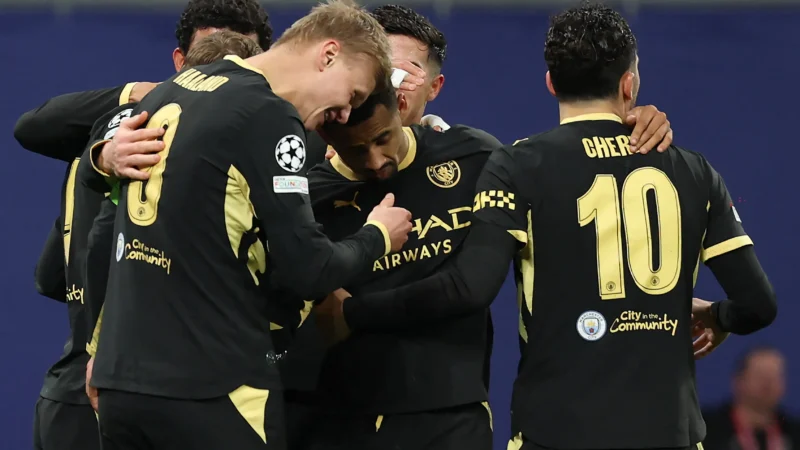
Manchester City player ratings: Haaland decisive as Ndiaye impresses in Leipzig win
Human
RB Leipzig 2-3 Man City: Haaland winner settles five-goal Champions League contest
Human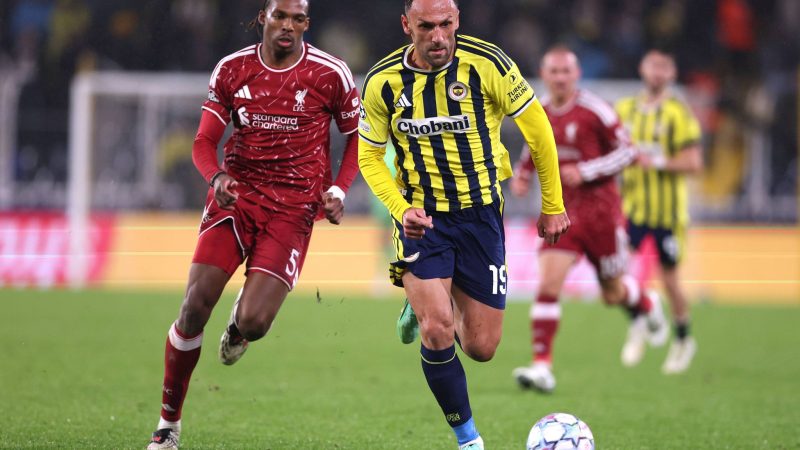
Liverpool player ratings vs Fenerbahce: Nyoni and Isak earn 7s as Jacquet struggles in 3-2 defeat
Human
Fenerbahce 3-2 Liverpool: Reds throw away lead twice as Muriqi ends perfect European start
Human
Man City lineup vs RB Leipzig confirmed: Haaland captain as Foden and Cherki start
Human