
 Premier League
 Championship
 EFL One & Two
 Scottish Premiership
 WSL
 Champions League
 Europa League
 FA Cup
 Carabao Cup
 Arsenal News
 Aston Villa News
 Chelsea News
 Liverpool News
 Man City News
 Man Utd News
 Newcastle News
 Tottenham News
 Premiership Rugby
 URC
 Six Nations
 Nations Championship
 Bath
 Leicester Tigers
 Saracens
 Northampton Saints
 Harlequins
 Bristol Bears
 Leinster
 Munster
 Glasgow Warriors
 Cardiff

Shaun Edwards: Can he take Argentina closer to a World Cup final?
Shaun Edwards has a year to help Argentina answer a question that has followed them through three World Cup semi-final appearances: how do they take the next step?

Shaun Edwards has a year to help Argentina answer a question that has followed them through three World Cup semi-final appearances: how do they take the next step?
His appointment as defence coach gives Felipe Contepomi an experienced addition ahead of the 2027 tournament in Australia. Mario Ledesma is also returning as forwards coach, strengthening a coaching team preparing for the most demanding part of the international cycle.
Edwards’ move to Argentina is significant because of the time available and the experience he brings. His work with Wales and France contributed to seven Six Nations titles across two very different teams.
The challenge now is to turn that experience into decisions Argentina can repeat under pressure, against opponents capable of punishing a single mistake.
What can Shaun Edwards change?
The most useful way to judge a defence is to look beyond its biggest tackles.
An attacker stopped behind the gainline makes an obvious impression. Less visible is the communication that put the defender in the right position, or the covering run that removed an alternative pass.
Those details determine whether an aggressive defence works.
Moving forward quickly can deny an opponent time to assess their options. But if one defender advances without the players beside him, the same movement can open a gap. If the outside backs commit without adequate cover behind them, a kick can turn pressure into an attacking opportunity.
For Argentina, the potential benefit of Edwards’ arrival is greater clarity over those decisions: when to press, when to hold, who covers the space behind and how the team reorganises after a break.
The appointment announcement does not set out a detailed tactical system. It would therefore be premature to promise a particular defensive shape.
The important question is how consistently the players can act together once his work begins.
Why discipline matters as much as aggression
There is a useful example from Edwards’ time with France.
During the 2022 Six Nations, France conceded 14 penalties in their opening victory over Italy. A behind-the-scenes account published by Six Nations Rugby subsequently highlighted work by Edwards and former referee Jérôme Garcès on discipline before the Ireland match.
That illustrates an important part of defensive coaching. A team can make a succession of effective tackles and still surrender the advantage through an avoidable penalty.
Offside decisions, the timing of a challenge at the breakdown and the tackler’s release all influence where the next passage of play takes place.
For Argentina, any improvement in defensive pressure will be more valuable if it also reduces opportunities for opponents to escape through penalties.
The balance is demanding. Players must recognise when they can contest possession and when getting back into position offers the team a better chance.
That judgment becomes particularly important late in a close match, when one penalty can change the result.
Why Mario Ledesma’s return matters
Edwards’ work will also depend on what happens around him.
Ledesma, Argentina’s head coach between 2018 and 2022, is returning to oversee the forwards. The Argentine Rugby Union announced both appointments as part of the preparations for next year’s World Cup.
The connection between those roles matters.
A defence facing slow possession has more time to organise. A defence retreating after a dominant carry has fewer options, regardless of how well its players understand the system.
The forwards’ work around the tackle area therefore influences the choices available to the defensive line. Equally, a coordinated chase after a kick can help prevent an opponent from returning the ball into open space.
Contepomi’s task will be to make those responsibilities fit together. Edwards can influence the defensive organisation, but the quality of the ball Argentina concede, their kicking decisions and their ability to retain possession will all affect the demands placed on it.
Argentina already have World Cup pedigree
Argentina reached the World Cup semi-finals in 2007, 2015 and 2023. Their ambition to progress further has a foundation in tournament results.
Their last semi-final also showed how difficult that step can be. New Zealand won 44–6 in Paris in 2023, scoring seven tries.
That result belongs to a previous tournament and coaching regime. It cannot serve as a diagnosis of Argentina’s current defence.
It does, however, underline the distinction between reaching the final four and winning at that level. A side can earn its place deep into a tournament and still find the next opponent exposes weaknesses that earlier matches did not.
Argentina’s 38–30 victory over New Zealand in Wellington in 2024 offered a different illustration of their capabilities.
The longer-term ambition is to produce performances of that quality often enough to survive successive knockout matches. A more dependable defence could contribute by keeping games within reach when the attack is struggling.
What should supporters watch for?
November’s matches against Ireland, Italy and France will provide early evidence of the partnership, although a small number of games will offer only a limited assessment.
The most revealing moments may come after Argentina’s initial defensive line has been breached.
Do covering players buy enough time for their team-mates to recover? Can Argentina prevent one dangerous carry becoming several? Does the organisation hold when replacements enter and fatigue begins to affect decisions?
Penalty patterns will also be worth watching, particularly when opponents establish possession close to the Argentina line.
A headline tackle-success percentage cannot answer all those questions. A completed tackle may still allow a substantial gain, while a missed tackle can sometimes be covered without serious damage.
The location and consequences of defensive errors matter as much as their number.
How much can change before 2027?
Edwards is due to join Argentina at the end of October, leaving roughly a year before the World Cup.
That gives him opportunities to establish expectations, review performances and refine the approach. International coaching still involves limited time with players, making clear priorities essential.
His record gives Argentina reason to be optimistic. It does not remove the need for a functioning attack, reliable set-piece work or sufficient depth when injuries arrive.
The appointment will ultimately be judged through performances. If Argentina become harder to stretch, recover more effectively after breaks and concede fewer avoidable opportunities, Edwards will have made a meaningful contribution.
Those are the improvements that could keep a World Cup knockout match alive long enough for Argentina to win it.
Related
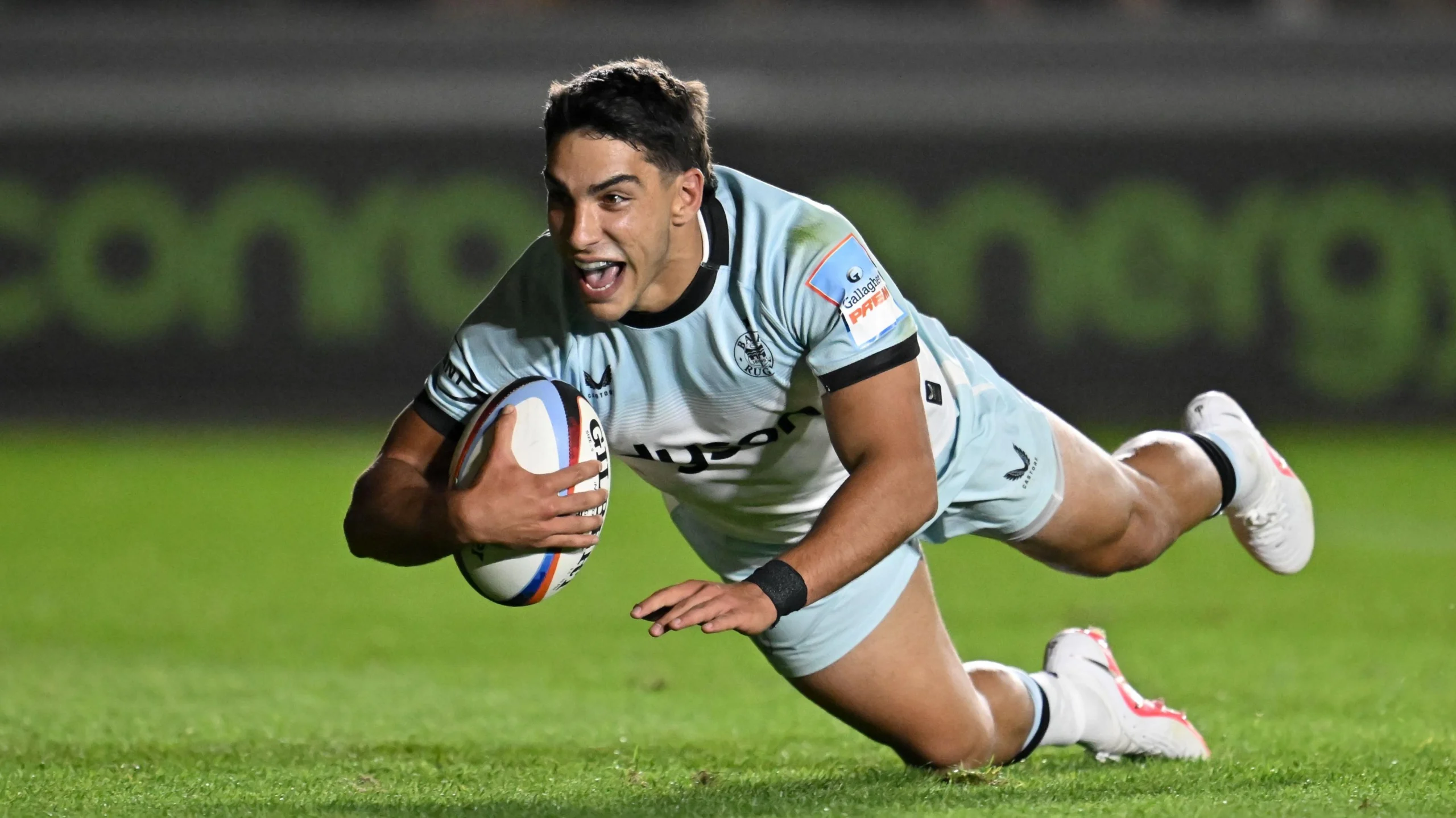
Santiago Carreras injury: Bath back ruled out for season in blow to Argentina
AI
Immanuel Feyi-Waboso hands England injury boost as Fin Smith faces fitness wait
AI
Feyi-Waboso England Stood Down: Hamstring Delay Explained
Data + AI
Jamie Benson Ireland Rugby: Ex-England U20s Fly-Half Called Up
Data + AI Ciaran Frawley Ireland Fly-Half: Why He Should Start
Data + AI