 Premier League
 Championship
 EFL One & Two
 Scottish Premiership
 WSL
 Champions League
 Europa League
 FA Cup
 Carabao Cup
 Arsenal News
 Aston Villa News
 Chelsea News
 Liverpool News
 Man City News
 Man Utd News
 Newcastle News
 Tottenham News
 Premiership Rugby
 URC
 Six Nations
 Nations Championship
 Bath
 Leicester Tigers
 Saracens
 Northampton Saints
 Harlequins
 Bristol Bears
 Leinster
 Munster
 Glasgow Warriors
 Cardiff

How Luke Humphries’ Grand Prix comeback strengthens his World Championship challenge
Luke Humphries’ World Grand Prix victory offers a persuasive reason to take his World Championship ambitions seriously. The strongest evidence lies in how he recovered, then finished, against…
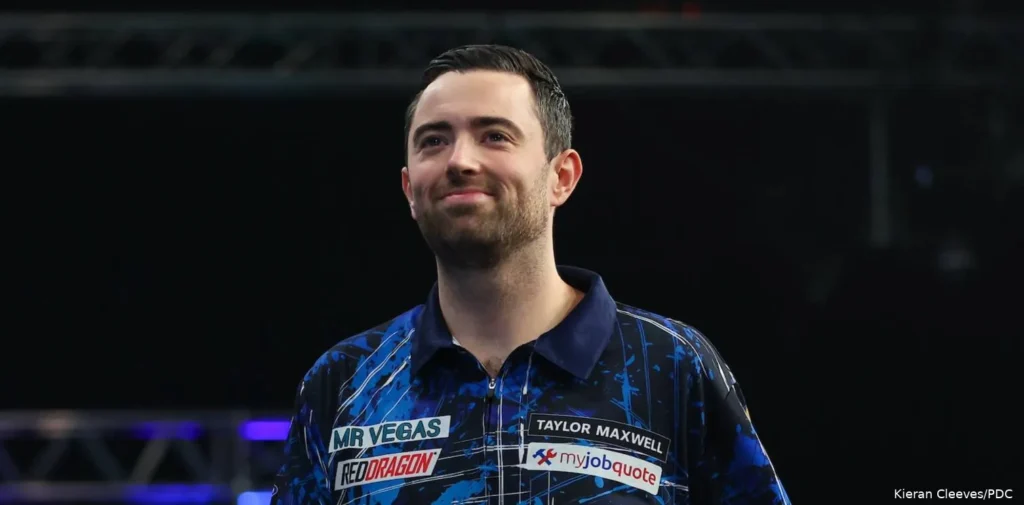
Luke Humphries’ World Grand Prix victory offers a persuasive reason to take his World Championship ambitions seriously. The strongest evidence lies in how he recovered, then finished, against Gerwyn Price.
His 6-4 victory in Leicester required two responses: recovering from three sets behind, then regrouping when Price stopped that comeback and levelled at 4-4.
That second challenge matters. Humphries had worked his way into the lead, lost it, and still produced his most decisive darts with the trophy within reach.
Humphries made his finishing count
The final’s statistics, published by dartn.de, show how closely the players were matched.
Price averaged 95.37 to Humphries’ 93.16, while both hit 10 maximums. Humphries, however, converted 21 of 42 checkout attempts, a 50% success rate, compared with Price’s 20 from 45.
Those figures require context. A checkout percentage does not reveal how difficult every finish was or how much pressure accompanied it. It would be too simple to attribute the result entirely to that difference.
The timing was revealing, though. Humphries’ 105 checkout in the deciding leg of the fourth set prevented Price from moving 4-0 ahead. He took an opportunity that kept the contest alive.
For a prospective world champion, that ability has obvious value: difficult matches can turn on taking one chance before the opponent returns.
The response at 4-4 was especially convincing
Humphries won four successive sets to lead 4-3, but Price then swept the eighth to restore parity.
There was another opening for Price in the ninth, when he missed two set darts. Humphries punished those misses and won the deciding leg with a 10-darter before taking the final set without reply.
The Sky Sports match report, carried by Coast FM, records an 11-dart finish to complete the victory.
That sequence supports a more useful assessment than simply praising his resilience. Humphries combined survival with the scoring and finishing needed to take control.
Price’s missed chances remain part of the explanation. Humphries did not dominate throughout, and a future opponent might close those openings. His achievement was making them count when they arrived.
Set-play success has limits as a guide
The Grand Prix and World Championship both use sets, making Leicester relevant preparation for the changing rhythm of a long match.
A player can lose several legs heavily yet remain competitive by winning the decisive legs in closer sets. Managing those shifts matters alongside the overall average.
However, the Grand Prix requires a double to begin scoring in each leg. The World Championship uses a straight start, so the scoring conditions differ.
Humphries’ average should therefore be assessed within this tournament’s format. It cannot simply be placed beside an Alexandra Palace average as a direct measure of readiness.
Littler remains a separate test
Humphries had already shown encouraging form before the final, averaging more than 96 in his 5-3 semi-final win over James Wade, according to Darts World.
That gives the title more substance than one dramatic recovery. He came through different opponents and different match situations.
Still, his ambition to face Luke Littler in another world final carries a clear challenge. Sky Sports reports that Littler has won their past four meetings in major finals.
Beating Price does not resolve that matchup. What Leicester supplies is evidence that Humphries can recover from a poor start, sustain a tournament run and finish a major final strongly. Reproducing those qualities through the remaining autumn events would strengthen his case further.
Follow Nine Dart News on X and Facebook for every darts result.
Related
Players Championship 33 draw: Archie Self faces Luke Humphries as Beau Greaves meets Peter Wright
Human
Why Luke Littler is seeded 11th at the European Championship
Human
European Championship darts 2026 draw: Littler faces O’Connor as Noppert meets Bunting
Human
European Championship 2026 Prize Money: £150,000 To Win In Dortmund
Human
Jonny Clayton changes holiday plans after securing Grand Slam place
Human