 Premier League
 Championship
 EFL One & Two
 Scottish Premiership
 WSL
 Champions League
 Europa League
 FA Cup
 Carabao Cup
 Arsenal News
 Aston Villa News
 Chelsea News
 Liverpool News
 Man City News
 Man Utd News
 Newcastle News
 Tottenham News
 Premiership Rugby
 URC
 Six Nations
 Nations Championship
 Bath
 Leicester Tigers
 Saracens
 Northampton Saints
 Harlequins
 Bristol Bears
 Leinster
 Munster
 Glasgow Warriors
 Cardiff


Aston Villa vs Viking: How Bayern Munich’s frustration offers Unai Emery a Champions League warning
Viking’s defensive organisation and counterattacking threat troubled Bayern Munich, but the same match also showed where Aston Villa could find openings on Wednesday.
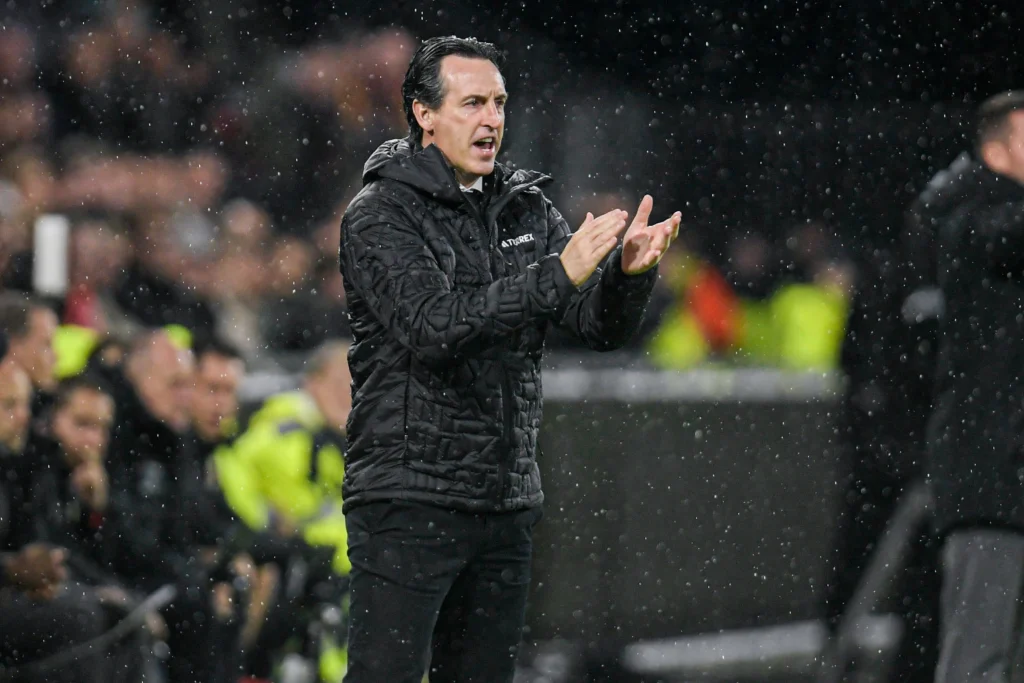
Viking’s defensive organisation and counterattacking threat troubled Bayern Munich, but the same match also showed where Aston Villa could find openings on Wednesday.
Aston Villa vs Viking presents Unai Emery with a specific challenge: breaking down opponents who frustrated Bayern Munich without leaving his own side exposed on the counterattack.
The Norwegian champions arrive at Villa Park on Wednesday 21 October having drawn 3-3 with Bayern in their previous Champions League match. They led by two goals, conceded three and then recovered a point after Michael Olise’s dismissal.
That sequence offers a useful starting point for assessing the visitors. Viking demonstrated an ability to punish mistakes, while Bayern’s comeback exposed weaknesses Villa can examine.
Emery’s side approach the fixture after their 6-0 victory over Fenerbahçe and 1-0 win at Newcastle United. Wednesday will require them to recognise when to accelerate an attack and when to keep possession moving.
Aston Villa vs Viking: finding space between the lines
One of the most revealing findings from UEFA’s analysis of Viking against Bayern concerns the space between the Norwegian side’s midfield and defence.
UEFA’s game insights unit recorded only two Bayern line-breaks between those units that led to shots or goals, compared with ten against Bodø/Glimt in their opening league-phase match.
That is a specific measure from two different opponents, rather than a complete assessment of either defence. It nevertheless helps explain the difficulty Bayern encountered.
Viking coach Bjarte Lunde Aarsheim said the team had learned from leaving too much space in a mid-block against Stuttgart. Against Bayern, they committed to pressing high or retreating into a compact defensive shape.
For Villa, the implication is that players receiving between the lines may need movement around them to create room. A forward dropping towards the ball, supported by a runner going beyond him, could force a defender to choose between following and holding his position.
Simply occupying the space will not guarantee access to it.
A corner and a counterattack supplied the warning
Viking’s first two goals against Bayern illustrated different dangers.
Gianni Stensness headed them ahead from a corner inside two minutes. Peter Christiansen then finished a breakaway to double the advantage before half-time, as Bayern’s official match report records.
The second goal is particularly relevant to a home side hoping to sustain pressure. Attacking numbers can become a vulnerability if possession is lost with too few players positioned to delay the counterattack.
Villa therefore need clear responsibilities behind the ball. When a full-back advances, the nearest midfielder and covering defender must be ready for the first forward pass after a turnover.
Zlatko Tripić also deserves close attention. The Viking captain supplied two assists against Bayern, with UEFA technical observer Sean Dyche highlighting the team’s compact defending and effective transitions in his assessment of the match.
Preventing avoidable corners and protecting against the break would reduce two routes through which Viking unsettled stronger opposition.
Bayern also showed where Viking can be hurt
The draw should be assessed alongside the chances Viking conceded and the circumstances of their recovery.
Harry Kane scored twice after the interval before helping create Bayern’s third. His pass released Konrad Laimer, whose delivery allowed Luis Díaz to finish. Olise was subsequently sent off, and substitute Herman Haugen headed Viking’s equaliser.
That third Bayern goal offers Villa a useful attacking principle: combine a player moving towards possession with another running beyond the defence.
It requires timing and an accurate pass, but it can make a compact team defend while turning towards its own goal.
There is also a limit to treating the result as a prediction of Wednesday’s contest. Viking were at home, their supporters helped drive the late response and Bayern played the closing stages with ten men.
In the post-match reaction published by Bayern, Aarsheim acknowledged that Viking needed to improve their defensive response after conceding three times. His team’s resilience was impressive; their organisation still came under considerable strain.
Villa must make their attacking movement count
Viking’s progress has foundations beyond one European result.
In Adam Bate’s interview for Sky Sports, sporting director Erik Nevland and chief executive Eirik Bjørno described the importance of local knowledge and continuity. Joint coaches Aarsheim and Morten Jensen have helped a club that was in the second tier in 2018 become Norwegian champions in 2025.
That background explains some of the confidence behind their European performances. Villa will face opponents with a clear idea of how they want to compete.
The assessment for Emery is to use movement to draw that organisation apart while retaining cover against the counterattack.
Johan Manzambi’s winning header at Newcastle, arriving to meet João Gomes’ cross, provided a recent example of Villa connecting a delivery with a well-timed run. Their task against Viking is to create those connections consistently.
Villa should have confidence in their attacking options. The Bayern match suggests that patience, coordinated runs and concentration after losing possession will determine how effectively they use them.
Related
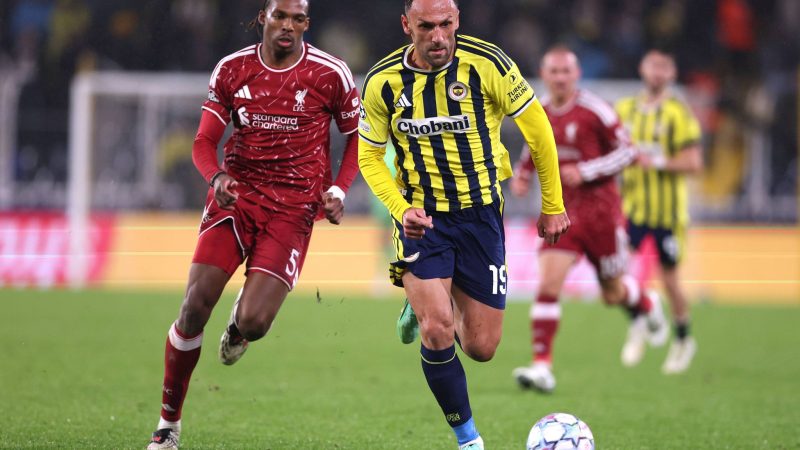
Liverpool player ratings vs Fenerbahce: Nyoni and Isak earn 7s as Jacquet struggles in 3-2 defeat
Human
Fenerbahce 3-2 Liverpool: Reds throw away lead twice as Muriqi ends perfect European start
Human
Man City lineup vs RB Leipzig confirmed: Haaland captain as Foden and Cherki start
Human
Arsenal lineup vs Slavia Prague confirmed: Gyokeres starts as Saliba returns to the bench
Human
Fenerbahce vs Liverpool lineups: Isak and Wirtz benched as Iraola makes five Champions League changes
Data + AI