
 Premier League
 Championship
 EFL One & Two
 Scottish Premiership
 WSL
 Champions League
 Europa League
 FA Cup
 Carabao Cup
 Arsenal News
 Aston Villa News
 Chelsea News
 Liverpool News
 Man City News
 Man Utd News
 Newcastle News
 Tottenham News
 Premiership Rugby
 URC
 Six Nations
 Nations Championship
 Bath
 Leicester Tigers
 Saracens
 Northampton Saints
 Harlequins
 Bristol Bears
 Leinster
 Munster
 Glasgow Warriors
 Cardiff


Five games without a win: why Arsenal Women keep dropping points
Arsenal Women finished Saturday’s draw with Birmingham City with 27 shots and another opportunity to close the gap slipping away.
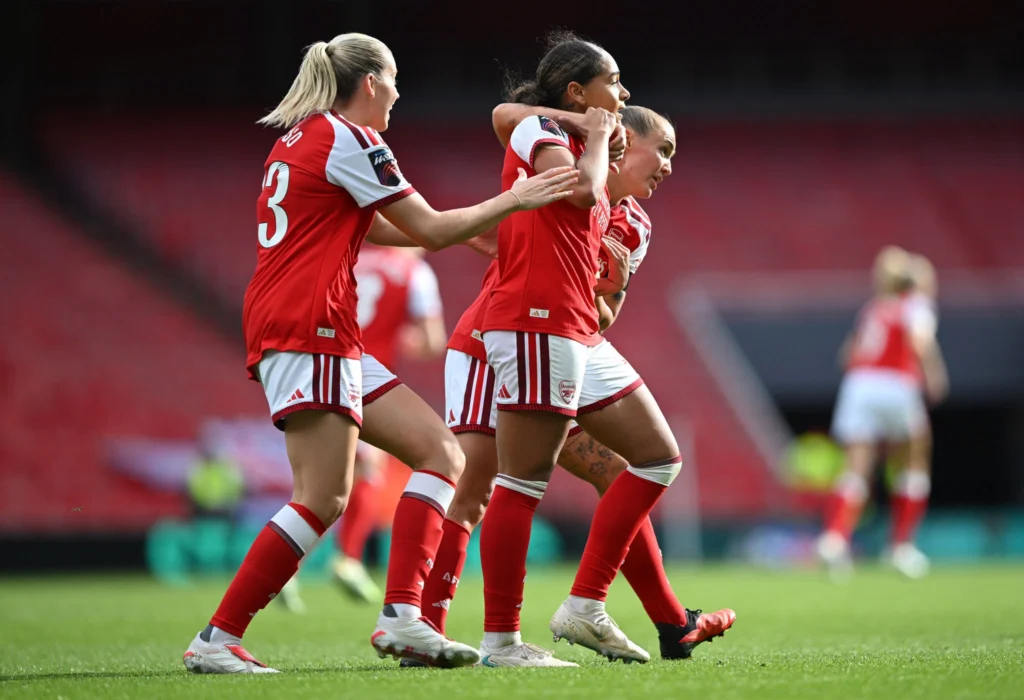
Arsenal Women finished Saturday’s draw with Birmingham City with 27 shots and another opportunity to close the gap slipping away.
Olivia Smith’s equaliser rescued a point, but the 1-1 draw at the Emirates extended their winless WSL run to five matches. Six games into the season, Arsenal have scored five goals and collected six points. Manchester City have 18 points after maintaining their perfect start against Brighton.
The numbers demand scrutiny of Arsenal’s attack. Their recurring defensive problems also deserve attention: every goal conceded makes an already difficult task harder for a side struggling to turn possession into wins.
Arsenal Women need to improve the quality of their chances
Against Birmingham, Arsenal had 76% possession and outshot their opponents 27-5. Only four of those attempts were on target.
That leaves considerable room for better finishing. However, treating every unsuccessful attempt as a striker’s failure would overlook how the opportunities are being constructed. A shot taken under pressure, through defenders or from a poor angle carries a different expectation from a clear opening.
Opta’s analysis of Arsenal’s first four league matches identified both problems. They scored twice from 78 shots, while their average non-penalty expected goals per attempt was 0.085, the second-lowest figure in the division at that stage.
Those figures cover the opening four matches, before the defeat at Manchester City and Saturday’s Birmingham draw completed the current six-game sample. They show that the difficulty predates this latest setback.
There have also been matches when Arsenal created enough to expect a better result. Their goalless draw with Crystal Palace brought 30 shots and 2.57 expected goals, according to Opta’s assessment of that game.
Taken together, the evidence points towards two jobs for Slegers: improve the openings Arsenal manufacture and get more from the good ones they already create. Asking the players simply to shoot more offers little when the attempt count is already so high.
Losing possession is becoming too costly
Birmingham scored through Océane Hurtré before Smith brought Arsenal level. Once again, the home side were required to chase a game they had spent long periods controlling.
Slegers acknowledged the vulnerability afterwards. In her post-match press conference, she said: “We aren’t defensively solid enough at the moment.”
She specifically identified positioning behind the ball and the response to losing possession as areas needing improvement.
That matters because attacking pressure depends partly on what happens behind it. If Arsenal can stop a counterattack early, they can sustain their own pressure. If the opposition escape, players must recover towards their own goal before the next attack can begin.
For a team already finding goals difficult to come by, conceding first reduces the room for error further. Against Birmingham, Smith’s excellent finish was required just to restore parity.
Injuries have complicated Slegers’ selection decisions
The latest absences have made finding a settled attacking combination harder.
Before the Birmingham match, Slegers said Mariona Caldentey faced around eight to 10 weeks out with a hamstring injury. Selina Cerci was also unavailable following knee surgery. Kim Little subsequently missed the game through illness, while Frida Maanum was absent with a muscle injury.
Slegers explained that losing Caldentey, Little and Maanum removed three possible options for the number 10 position. Alessia Russo played there against Birmingham, with Stina Blackstenius leading the attack.
That creates a difficult balance. Russo can help connect midfield and attack, but Arsenal also need her arriving in positions to finish moves. The test is whether using her deeper produces enough opportunities for the team to justify moving her away from the central striker’s role.
The injuries explain some of Saturday’s reshuffle. The earlier attacking data shows why returning players alone cannot be the entire recovery plan.
The Tottenham derby needs a different response
The next league test is away at Tottenham on Saturday 24 October. Spurs have 10 points, four more than Arsenal, giving the derby significance beyond local pride.
Slegers has recognised the cost of repeatedly recovering from setbacks. Speaking after Birmingham, she stressed the need to establish better positions earlier in matches rather than continually spending energy chasing them.
Arsenal need to carry that urgency into the opening stages: move the ball quickly enough to unsettle defenders, support the player receiving the final pass and maintain protection against the counterattack.
After City’s latest victory over Brighton, the gap at the top has reached 12 points. Slegers’ immediate task is to give Arsenal a reliable way of winning again. Another afternoon of territorial dominance will offer little reassurance if the same weaknesses decide the result.
Related

Arsenal beat Slavia Prague 2-1 as Gyökeres scores and assists in Prague
Data + AI
Arsenal lineup vs Slavia Prague confirmed: Gyokeres starts as Saliba returns to the bench
Human
Fenerbahce vs Liverpool lineups: Isak and Wirtz benched as Iraola makes five Champions League changes
Data + AI
William Saliba ready for Arsenal return against Slavia Prague after completing 45-minute comeback test
Human
Slavia Prague vs Arsenal preview: Saliba return boosts Arteta as Gunners weigh changes, predicted line-ups and prediction
Human