 Premier League
 Championship
 EFL One & Two
 Scottish Premiership
 WSL
 Champions League
 Europa League
 FA Cup
 Carabao Cup
 Arsenal News
 Aston Villa News
 Chelsea News
 Liverpool News
 Man City News
 Man Utd News
 Newcastle News
 Tottenham News
 Premiership Rugby
 URC
 Six Nations
 Nations Championship
 Bath
 Leicester Tigers
 Saracens
 Northampton Saints
 Harlequins
 Bristol Bears
 Leinster
 Munster
 Glasgow Warriors
 Cardiff


Sunderland vs Brighton analysis: why the extra man changed so little
The most frustrating part of Sunderland’s defeat by Brighton was the opportunity it presented. Trailing by one goal, with more than half an hour remaining, they were given…
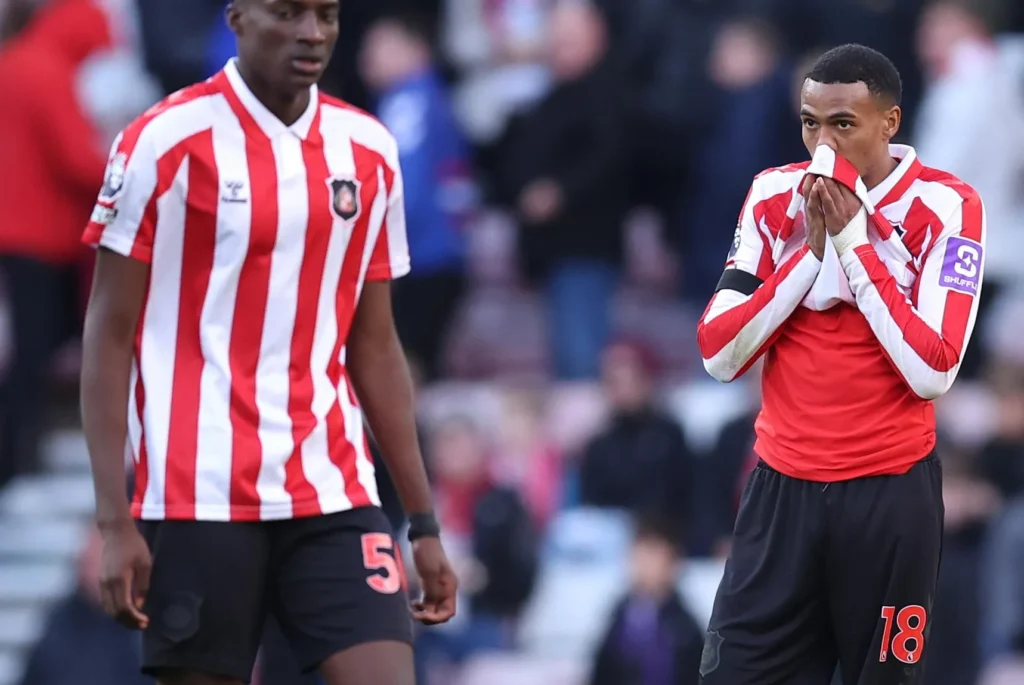
The most frustrating part of Sunderland’s defeat by Brighton was the opportunity it presented. Trailing by one goal, with more than half an hour remaining, they were given a numerical advantage that should have made the visitors’ afternoon considerably harder.
Instead, Brighton protected their lead and added a second goal in stoppage time.
This Sunderland vs Brighton analysis centres on that failure to turn favourable circumstances into sustained danger. The hosts finished with 62% possession, but their 2–0 defeat at the Stadium of Light exposed the difference between having the ball and using it effectively.
Régis Le Bris identified the problem himself.
“We didn’t show the quality or composure. We have to improve in that regard,” he told BBC Sport in comments syndicated by AOL.
Sunderland vs Brighton analysis: possession without enough penetration
The full-match statistics make uncomfortable reading for Sunderland.
| Statistic | Sunderland | Brighton |
|---|---|---|
| Possession | 62% | 38% |
| Shots | 12 | 13 |
| Shots on target | 3 | 4 |
| Big chances | 1 | 5 |
| Corners | 7 | 5 |
These figures cover the whole game, including the period before Pascal Struijk’s dismissal. They should not be presented as a breakdown of Sunderland’s performance against ten men.
Even with that qualification, they show why possession was a poor measure of attacking success. Brighton finished with more attempts and substantially more big chances despite spending the final third of the match a player down.
For Sunderland, the question is what happened between keeping possession and reaching positions from which they could seriously threaten Bart Verbruggen.
Three shots on target across the afternoon gave Brighton’s goalkeeper relatively little work.
The red card changed the problem Sunderland had to solve
Struijk’s dismissal came four minutes after Maxim De Cuyper had put Brighton ahead.
Before the red card, Wilson Isidor’s movement behind the defence had caused problems. His run drew the challenge that led to Struijk being sent off.
Afterwards, Sunderland faced opponents with a stronger incentive to defend closer to their own goal. Le Bris specifically identified Brighton’s deep defensive shape in his post-match assessment.
That changed the attacking requirement. Space behind the defence became harder to find, increasing the importance of accurate combinations, well-timed runs and deliveries that reached a team-mate.
An extra player helps a side circulate the ball. It does not automatically create an unmarked attacker inside the penalty area.
Sunderland needed their possession to move Brighton’s defenders out of position. The limited threat after the dismissal suggests they did not achieve that often enough.
There had been a useful example before half-time
Sunderland’s earlier attacking play showed what a more effective sequence could look like.
Granit Xhaka released Enzo Le Fée down the left, and the resulting delivery found Isidor, whose effort was deflected against the outside of the post. Sky Sports’ match report identifies it as one of the hosts’ clearest moments.
The move combined a forward pass, a runner reaching space and a striker attacking the delivery. It gave Brighton several actions to defend in quick succession.
Replicating that against a deeper defence was harder. Nevertheless, it illustrated the value of movement around the ball rather than possession alone.
Xhaka shared Sunderland’s highest mark with Nordi Mukiele in our Sunderland vs Brighton player ratings, both receiving 7.5. Individual contributions were present, but the collective attacking performance remained insufficient.
Brighton adjusted while retaining an outlet
Fabian Hürzeler responded to the dismissal by replacing striker Charalampos Kostoulas with Lewis Dunk in the 60th minute.
That restored a central defender and gave Brighton a clearer basis for protecting their advantage. Further substitutions refreshed the side before Georginio Rutter and Jaouen Hadjam arrived late on.
Those final two replacements combined for the second goal. Rutter held the ball up before supplying Hadjam, whose finish ended Sunderland’s hopes of an equaliser.
It highlighted another difficulty for the hosts. Committing players forward was necessary, but Brighton still had players capable of turning possession into a counter-attack.
Sunderland therefore needed attacking urgency alongside protection against the break. The second goal showed the consequences when Brighton found a way out.
Le Bris needs more than a demand for urgency
Sunderland’s substitutions changed the personnel without producing the required breakthrough.
Malick Fofana had already replaced Thomas Meunier before half-time. Jocelin Ta Bi and Dayann Methalie entered in the 73rd minute, with Juan Riquelme Angulo replacing Le Fée later.
The outcome does not establish that any single change caused the defeat. It does leave Le Bris needing more reliable attacking combinations when opponents defend their penalty area in numbers.
The priority is practical: move the ball quickly enough to shift the defence, support the receiver and make the final delivery count.
Our Saturday Premier League talking points reflected contrasting afternoons across the division. For Sunderland, the clearest lesson was how little their territorial advantage achieved.
The next improvement must be visible in the chances they create. More possession will offer limited reassurance unless it gives the opposition goalkeeper more difficult decisions to make.
Related
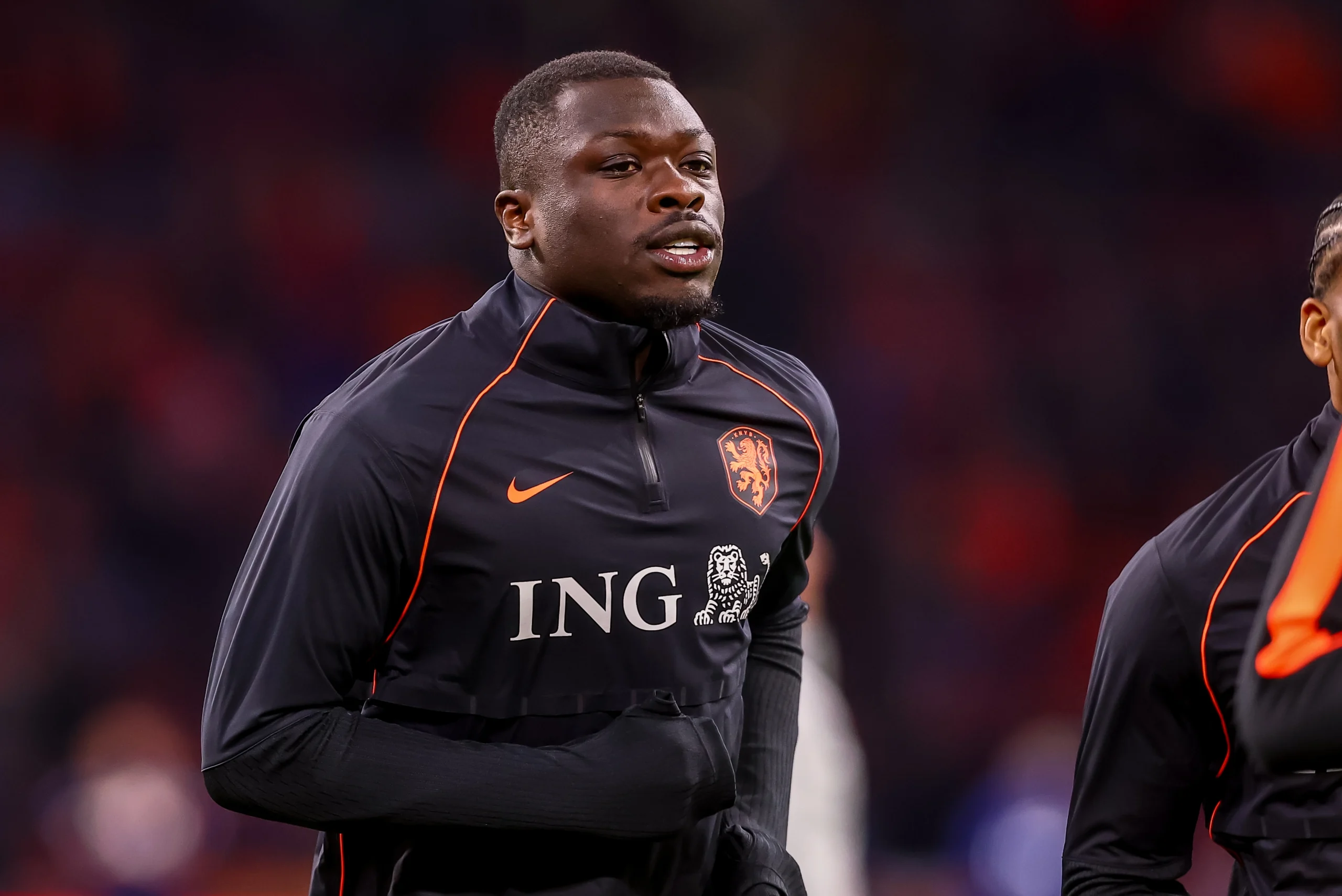
Brian Brobbey signs new Sunderland contract until 2031 as striker targets more after European breakthrough
Human
How to watch Getafe vs Brighton: UK TV channel, live stream and Conference League kick-off time
Human
How to watch Sunderland vs Dinamo Zagreb: UK TV channel, live stream and Europa League kick-off time
Human
Premier League winners and losers: Brighton make history as Arsenal go clear and Man Utd slide
Human
Wasteful Man City punished again as Brighton expose defensive errors
Human