 Premier League
 Championship
 EFL One & Two
 Scottish Premiership
 WSL
 Champions League
 Europa League
 FA Cup
 Carabao Cup
 Arsenal News
 Aston Villa News
 Chelsea News
 Liverpool News
 Man City News
 Man Utd News
 Newcastle News
 Tottenham News
 Premiership Rugby
 URC
 Six Nations
 Nations Championship
 Bath
 Leicester Tigers
 Saracens
 Northampton Saints
 Harlequins
 Bristol Bears
 Leinster
 Munster
 Glasgow Warriors
 Cardiff

Lionel Messi and Argentina: From final heartbreak to World Cup glory
Lionel Messi’s Argentina career ended with a goal, two assists and a farewell in Buenos Aires. A decade earlier, it appeared to have finished with a missed penalty…
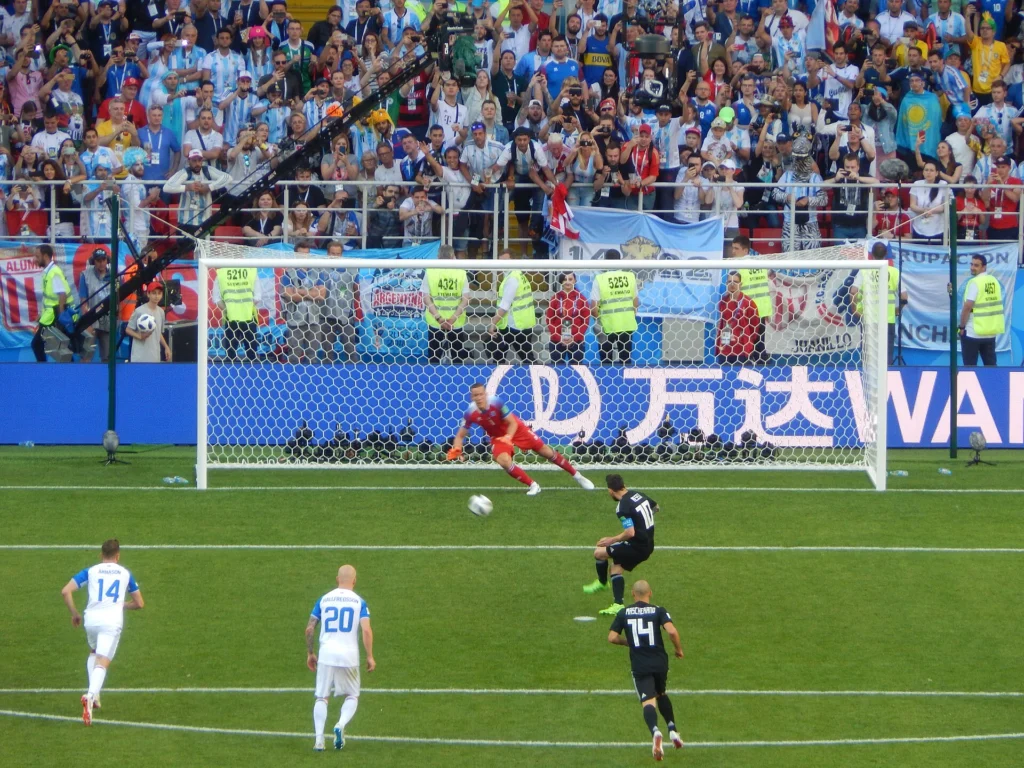
Lionel Messi’s Argentina career ended with a goal, two assists and a farewell in Buenos Aires. A decade earlier, it appeared to have finished with a missed penalty and another final defeat.
The distance between those moments explains why Tuesday’s goodbye carried such weight.
Argentina’s 3–0 victory over Benin brought Messi’s international record to 126 goals in 208 appearances. Those numbers establish his place as the country’s leading scorer and most-capped player.
The trophies tell another part of the story. A World Cup and two Copa America titles transformed an international career that had repeatedly approached its greatest prizes without securing them.
But the most revealing chapter may be the one in which Messi decided he could no longer continue, then returned to try again.
Messi’s Argentina career began with an early setback
Messi made his senior debut against Hungary on 17 August 2005, aged 18. He came off the bench and was sent off almost immediately.
It was an abrupt introduction for a player who had already helped Argentina win that year’s Under-20 World Cup, collecting the tournament’s Golden Ball and Golden Boot.
Olympic gold followed in Beijing in 2008. Argentina’s younger teams had supplied evidence of what Messi could achieve in the national shirt.
Senior football brought a different challenge.
His first Copa America final ended in a 3–0 defeat by Brazil in 2007. At the 2010 World Cup, an Argentina side coached by Diego Maradona lost 4–0 to Germany in the quarter-finals.
There was no simple progression from promising teenager to international champion. Each tournament brought another opportunity, but also another comparison between his growing achievements at Barcelona and the titles still missing with Argentina.
Three summers that almost ended everything
The sequence from 2014 to 2016 was particularly punishing.
Argentina reached the World Cup final in Brazil in 2014, losing 1–0 to Germany after extra time. Messi received the Golden Ball as the tournament’s best player, but Argentina left without the trophy.
A year later, Chile beat them on penalties in the Copa America final. In 2016, the same opponents defeated them in another shootout, this time in the tournament’s centenary edition.
Messi missed his penalty.
Three successive summers had taken Argentina to a major final. Each had ended in defeat.
FIFA’s contemporary account of his retirement announcement recorded his immediate assessment: “I’ve lost four finals.”
It was a stark way to describe a career already containing exceptional performances and records. At that moment, the defeats were what he chose to count.
The announcement also exposed the limitations of judging an individual entirely through a team’s final result. Reaching those matches required sustained excellence. Losing them did not mean Messi had contributed nothing.
Returning did not bring an immediate reward
Messi reversed his decision in August 2016.
That return was essential to everything that followed, but it should not be treated as the instant beginning of an uninterrupted rise.
He still had to play through another cycle of international football before the senior breakthrough arrived. There was no guarantee that returning would produce a different ending.
That uncertainty gives the decision its significance.
With hindsight, the comeback can appear inevitable because the later trophies are so familiar. At the time, Messi was returning to the possibility of more disappointment.
The eventual success belongs in the same story as those earlier defeats. Removing them would also remove much of the reason his first senior international title mattered.
The Maracana changed the conversation
Argentina’s 1–0 victory over Brazil in the 2021 Copa America final delivered that title.
Angel Di Maria scored the winner at the Maracana, the stadium where Argentina had lost the World Cup final seven years earlier.
For Messi, the victory ended the wait for a major senior international trophy. For Lionel Scaloni’s team, it established that they could finish a tournament by beating a leading opponent on the biggest occasion.
Di Maria’s decisive contribution is an important part of that history.
Messi was central to Argentina, but their success required other players to decide matches too. The captain did not need to score the winning goal for the achievement to become a defining moment in his career.
Argentina had finally converted another final appearance into a title. The next challenge was to do it on the world stage.
Qatar brought the defining achievement
The 2022 World Cup final demanded more than one moment of brilliance.
Messi scored twice against France, but Kylian Mbappe’s hat-trick helped take a 3–3 draw to penalties. Argentina then won the shootout 4–2.
Messi converted his kick. Emiliano Martinez made a save. Gonzalo Montiel scored the penalty that secured the trophy.
FIFA’s tournament review records both Messi’s contribution to the final and his Golden Ball award.
At 35, he had led Argentina to the prize that had remained beyond him in his previous World Cups.
The collective nature of the finish mattered. A final so closely associated with Messi also depended on a goalkeeper’s intervention and a defender’s composure from the spot.
His achievement was extraordinary. The team around him made it possible to complete.
Argentina learned to win when he could not finish
The 2024 Copa America final supplied a different illustration of that team’s strength.
Messi had to leave the field injured during the second half against Colombia. He watched from the bench as Argentina pursued another title without him.
Lautaro Martinez eventually scored the winner in extra time.
CONMEBOL’s report of the final details the contributions of Leandro Paredes and Giovani Lo Celso in the move that produced the goal.
For a career so often assessed through Messi’s ability to carry Argentina, this was a significant outcome. His team-mates could carry the match to its conclusion.
A second Copa America title also showed that the breakthrough of 2021 had become sustained tournament success.
A final defeat could not undo the career
There would be no second World Cup title.
Argentina lost 1–0 to Spain in the 2026 final, and Messi announced his international retirement on 31 August.
Another final defeat might once have dominated the judgement of his career. By then, it sat alongside the World Cup he had won and the continental titles that preceded and followed it.
Tuesday’s farewell against Benin allowed Argentina to recognise the whole journey.
Messi created goals for Nicolas Otamendi and Nico Paz before scoring a penalty himself. Otamendi was also ending his international career, while Paz represented a generation whose opportunities will continue after the captain’s departure.
The final totals are substantial enough: 208 appearances and 126 goals.
What makes them more meaningful is that Messi’s Argentina career continued beyond the night he first thought it was over.
Follow all the latest: Football live: Premier League 2026/27 news, transfers and updates.
Related

Immanuel Feyi-Waboso hands England injury boost as Fin Smith faces fitness wait
AI
Feyi-Waboso England Stood Down: Hamstring Delay Explained
Data + AI
Jamie Benson Ireland Rugby: Ex-England U20s Fly-Half Called Up
Data + AI Ciaran Frawley Ireland Fly-Half: Why He Should Start
Data + AI Ireland Rugby: Nations Championship Squad Announced by Andy Farrell
Data + AI