 Premier League
 Championship
 EFL One & Two
 Scottish Premiership
 WSL
 Champions League
 Europa League
 FA Cup
 Carabao Cup
 Arsenal News
 Aston Villa News
 Chelsea News
 Liverpool News
 Man City News
 Man Utd News
 Newcastle News
 Tottenham News
 Premiership Rugby
 URC
 Six Nations
 Nations Championship
 Bath
 Leicester Tigers
 Saracens
 Northampton Saints
 Harlequins
 Bristol Bears
 Leinster
 Munster
 Glasgow Warriors
 Cardiff

Jahrome Hughes and the World Cup defeat he still wants to put right
Jahrome Hughes scored New Zealand’s opening try in the 2022 World Cup semi-final. Four years later, it is the opportunity that slipped away against Australia which still occupies…
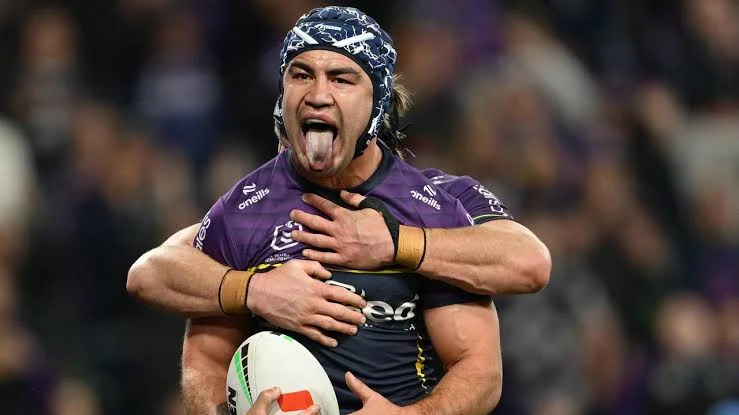
Jahrome Hughes scored New Zealand’s opening try in the 2022 World Cup semi-final. Four years later, it is the opportunity that slipped away against Australia which still occupies his thoughts.
“I take a lot of blame for losing that game,” he said on Monday, in comments published by NRL.com.
That is a severe assessment of his part in a two-point defeat. It also explains why Thursday’s World Cup opener against the same opponents carries particular significance for the Melbourne Storm half-back.
Since that night at Elland Road, Hughes has helped New Zealand inflict a record defeat on Australia and won the NRL’s highest individual honour. Neither achievement has removed his desire to put the World Cup disappointment right.
His return gives the Kiwis a playmaker with experience of beating the Kangaroos, as well as a painfully clear understanding of how narrow the margins can be.
Why the 2022 semi-final still matters to Jahrome Hughes
New Zealand had enough of that semi-final to believe they could win it.
Hughes finished the opening try after Joey Manu gathered Dylan Brown’s kick and offloaded. Brown later scored himself, taking the Kiwis into half-time with a 14-10 lead.
Cameron Murray’s converted try in the 53rd minute put Australia ahead. New Zealand then had almost half an hour to find a response, but could not score again.
The NRL’s contemporary match report records several moments when the result might have changed: a disallowed Peta Hiku try, another opportunity for Hiku near the corner and Latrell Mitchell’s catch to end a late attack.
Those details matter when considering Hughes’ self-criticism. This was a contest shaped by decisions and interventions across the pitch. His sense of responsibility should not become a verdict that one player cost New Zealand the match.
But the opportunity was substantial. They had led Australia in a World Cup semi-final and finished just two points short. For the player directing their attack, that remains unfinished business.
A career built through second chances
Hughes took an unusually long route to becoming the player trusted with that responsibility.
He made one NRL appearance for Gold Coast in 2013 and another for North Queensland in 2016. Between those opportunities, much of his football came in the Queensland Cup.
Melbourne signed him in 2017, but there was no immediate promotion to the centre of their attack. Hughes was still a full-back, competing at a club whose options included Billy Slater and, subsequently, Ryan Papenhuyzen.
The move into the halves came towards the end of 2019. It allowed Melbourne to accommodate Papenhuyzen while asking Hughes to develop a different set of responsibilities.
As ABC’s account of his rise explains, becoming an established half-back was a gradual process. His eventual standing was built through adaptation after years in which even a regular first-grade place had been difficult to secure.
By July 2024, Hughes was helping Melbourne cope with absences affecting Cameron Munster, Papenhuyzen and Harry Grant. Different combinations around him had increased the value of his own consistency.
That offers useful context for his international return. New Zealand need someone who can help an attack function through changing personnel, make decisions under pressure and give the players around him opportunities.
Hughes has already carried those responsibilities at club level.
The medal that confirmed his standing
The recognition followed at the 2024 Dally M Awards.
Hughes finished with 62 points, beating James Tedesco by one. Both collected the maximum six votes in the final round, preserving the Melbourne player’s narrow advantage.
He became the fourth New Zealander to win the medal, following Gary Freeman, Jason Taumalolo and Roger Tuivasa-Sheck.
The celebration carried its own international connection. Will Warbrick, Eli Katoa and Joseph Tapine performed a haka for Hughes after his victory was announced.
For a player who had struggled to establish himself earlier in his career, it was a significant acknowledgement from both the competition and his peers.
It also gives perspective to his comments this week. Hughes returns to the World Cup with his ability firmly established. The challenge is to bring that influence to a tournament in which New Zealand’s last campaign ended just short of the final.
New Zealand already have evidence they can beat Australia
There is a more encouraging result for Hughes to draw on than the defeat in Leeds.
His most recent New Zealand appearance came in the 30-0 Pacific Championships final victory over Australia in Hamilton in 2023.
That was Australia’s heaviest Test defeat. It came only a week after the Kiwis had lost 36-18 to the same opponents.
Hughes and Brown helped direct the response. New Zealand led 12-0 at half-time, then added another 18 points without conceding. Hughes’ passing helped create space for Jamayne Isaako as the Kiwis extended their advantage.
The defensive performance was equally important. Australia were denied throughout, while New Zealand turned their opportunities into a decisive lead.
Hamilton provides a useful balance to the focus on Hughes’ regret. He has already played a central role in a major victory over Australia since the World Cup exit.
It also underlines the collective nature of the task ahead. New Zealand’s best answer to Leeds involved contributions throughout the side. Thursday will demand the same.
A returning playmaker in a changing squad
Injuries have kept Hughes out of international football since that Hamilton victory. His selection therefore restores considerable experience to a squad also welcoming new faces.
As covered in our New Zealand World Cup squad report, Kalyn Ponga and Dane Gagai are among four potential debutants, alongside Warriors pair Jacob Laban and Tanner Stowers-Smith.
Their inclusion gives Stacey Jones options, although a squad announcement alone cannot establish how those combinations will work.
The immediate test is Australia at Allianz Stadium on Thursday 15 October. New Zealand then face the Cook Islands in Christchurch on 25 October and Fiji on the Gold Coast on 31 October.
For Hughes, the opening fixture brings an early opportunity to turn his reflections into a performance. Beating Australia would be a significant start, but his ambition extends beyond settling the score from one semi-final.
The World Cup final is in Brisbane on 15 November. That is the appointment he wants New Zealand to keep.
Related
Scotland vs New Zealand preview: Graham boost as Scots chase historic All Blacks win at Murrayfield
Human
England vs Ireland Wheelchair World Cup: brothers Jack Brown and Joe Calcott face off for top spot
Human
Samoa promote Fanua Rimoni for first Women’s Rugby League World Cup semi-final against New Zealand
Human
Reece Walsh gets Australia full-back nod ahead of James Tedesco for World Cup semi-final against Samoa
Human
Kalyn Ponga handed World Cup comeback chance as New Zealand name squad for Tonga semi-final
Human