
 Premier League
 Championship
 EFL One & Two
 Scottish Premiership
 WSL
 Champions League
 Europa League
 FA Cup
 Carabao Cup
 Arsenal News
 Aston Villa News
 Chelsea News
 Liverpool News
 Man City News
 Man Utd News
 Newcastle News
 Tottenham News
 Premiership Rugby
 URC
 Six Nations
 Nations Championship
 Bath
 Leicester Tigers
 Saracens
 Northampton Saints
 Harlequins
 Bristol Bears
 Leinster
 Munster
 Glasgow Warriors
 Cardiff
Darts Calendar 2026: Every Major Still To Come And When It’s Played
Five majors gone, five men's TV titles on one mantelpiece, and the hard half of the season still to play. The darts calendar 2026 now turns towards its…
Five majors gone, five men’s TV titles on one mantelpiece, and the hard half of the season still to play. The darts calendar 2026 now turns towards its money end: a double-start major in late September, a European title in October, the Grand Slam and Minehead in November, and then Alexandra Palace over Christmas. Here is every major still to come, when it is played, and what is actually riding on each one.
What has already gone — and who took it
The first half of 2026 was a clean sweep in progress. Luke Littler has won every men’s TV major staged so far this year:
- PDC World Championship (final, 3 January) — beat Gian van Veen 7–1 for a second world title.
- World Masters — beat Luke Humphries 6–5.
- UK Open — beat James Wade 11–7.
- Premier League Darts — beat Humphries 11–10 at The O2 on 28 May.
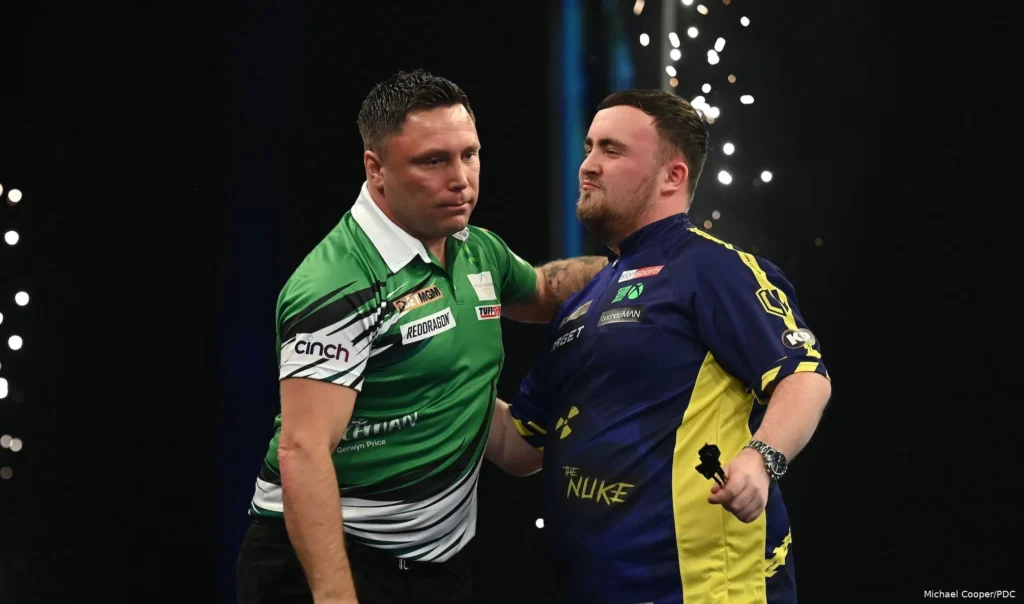
- World Matchplay — beat Gerwyn Price 18–9 in Blackpool in July.
That is why the Phil Taylor comparisons will not go away, and why the run-in matters more than usual. No player in the modern era has taken every major in a single calendar year. Littler is halfway there with the awkward ones left. If you want the long version of that argument, we have already made the case for and against him as the greatest of all time.
The darts calendar 2026: every major still to come
World Series of Darts Finals — 17–20 September. Not a ranking event, but the biggest non-ranking prize of the autumn and the last competitive hit-out before the majors restart. The World Series legs have already been round Oceania in August; this is the play-off that closes the roadshow. Our World Series of Darts explainer covers how the field is put together.
World Grand Prix — 28 September to 4 October. The next ranking TV major, and the strangest tournament in darts. Every leg must be started and finished on a double, which turns 100-plus averages into a lottery and regularly buries the favourites in round one. It is the single most likely place for the clean-sweep bid to die.
European Championship — 22–25 October. A 32-player straight knockout on German soil, filled from the year’s European Tour order of merit rather than the two-year list. That qualification route means it usually turns up two or three floor specialists who nobody on the TV panel wants to draw.
Grand Slam of Darts — 14–22 November, Wolverhampton. Nine days, and the only major that opens with round-robin groups instead of a knockout. Two lives in the group stage sounds generous until you lose the first one; the Slam has a long history of big names going home before the last 16.
Players Championship Finals — 27–29 November, Minehead. The top 64 on the one-year Pro Tour order of merit, three days, no seeding safety net. It is the reward for grinding the floor circuit all year, and it is the last chance to bank ranking money before the Worlds seedings are set.
PDC World Championship — 10 December to 3 January 2027, Alexandra Palace. The one that decides how the season is remembered. Littler goes in defending back-to-back titles, and Ally Pally is where the world number one is confirmed or unseated. Every previous winner is listed in our roll of honour from 1994 onwards.
What is actually at stake in the run-in
Two separate races run through these dates. The first is the clean sweep — a genuine shot at darts history that needs four more titles and cannot survive a single bad night.
The second is the fight behind Littler, and it is much tighter than the top line suggests. On the two-year Order of Merit snapshot at the end of July, Littler sat on roughly £3.13m — more than three times the next man. Behind him, Van Veen and Humphries were separated by around £2,000, with Price and Jonny Clayton next in line. Four majors’ worth of prize money will settle who goes to Alexandra Palace as world number two, and whether Humphries can start clawing back a gap that opened up over eighteen brutal months. If the ranking maths is new to you, start with how the PDC Order of Merit really works.
There is a third storyline too. Every autumn major hands out World Championship qualification and seeding, so for the players ranked 20th to 40th these ten weeks are not about trophies at all — they are about whether December means Ally Pally or the sofa.
How the calendar is structured
It helps to know which events count for what. Ranking majors — the Grand Prix, European Championship, Grand Slam, Players Championship Finals and the Worlds — pay into the two-year Order of Merit that decides seedings and qualification. The World Series Finals does not. Running underneath all of it are the Players Championship floor events and European Tour weekends, which is where most of the tour actually earns its living between the televised weeks.
Where to watch it
In the UK the autumn majors are split between Sky Sports and ITV4, with PDCTV carrying the floor events, and the schedule shifts year to year. We keep the channel-by-channel breakdown updated in our guide to watching darts in 2026. Confirmed session times, draws and ticket details are published by the PDC at pdc.tv as each event approaches.
The short version
Four ranking majors and one non-ranking play-off remain in the 2026 darts calendar: the World Series Finals in September, the Grand Prix from 28 September, the European Championship in October, the Grand Slam and Players Championship Finals in November, and the World Championship from 10 December. None of them has been played yet, and no winner exists — whatever the accumulator adverts imply. The Grand Prix on 28 September is where the season’s biggest question finally gets asked.
Follow Nine Dart News on X and Facebook for every darts result.
Related
Luke Littler to miss Players Championship Finals as Anderson and Aspinall face last-chance battle
Human
Players Championship 33 and 34: how to watch, UK start times and the race for Minehead
Human
Fallon Sherrock ranking: why her £501,000 win does not count
AI
Fallon Sherrock beats Luke Littler to win £501,000 on Netflix
AI
Everything that matters in sport today, Friday 30 October 2026
Human