 Premier League
 Championship
 EFL One & Two
 Scottish Premiership
 WSL
 Champions League
 Europa League
 FA Cup
 Carabao Cup
 Arsenal News
 Aston Villa News
 Chelsea News
 Liverpool News
 Man City News
 Man Utd News
 Newcastle News
 Tottenham News
 Premiership Rugby
 URC
 Six Nations
 Nations Championship
 Bath
 Leicester Tigers
 Saracens
 Northampton Saints
 Harlequins
 Bristol Bears
 Leinster
 Munster
 Glasgow Warriors
 Cardiff

Glasner Forest: why the move from Palace is going wrong
Oliver Glasner’s Forest are creating chances at a rate that should encourage their manager. The trouble is that supporters are still waiting to see a league goal at…
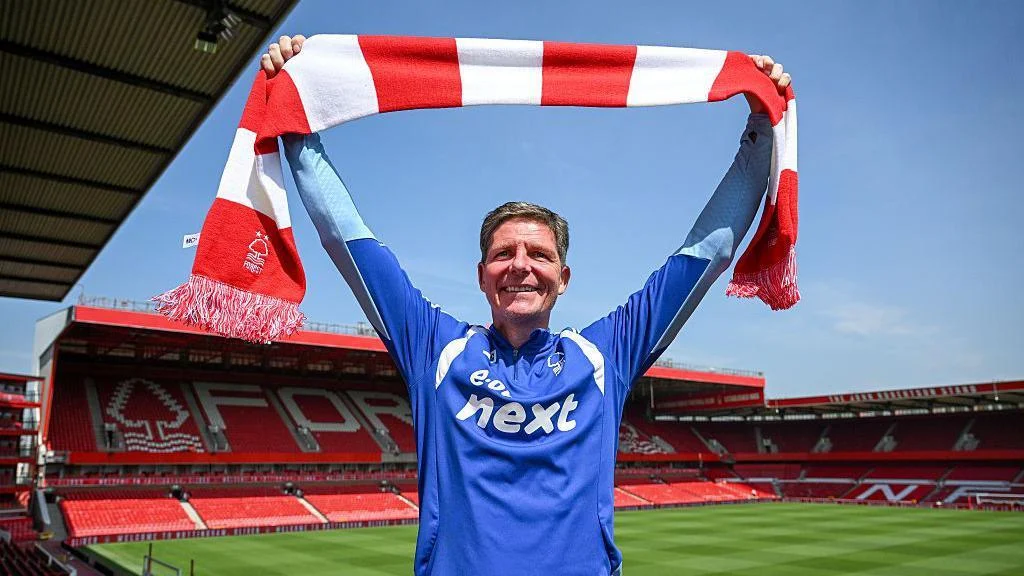
Oliver Glasner’s Forest are creating chances at a rate that should encourage their manager. The trouble is that supporters are still waiting to see a league goal at the City Ground this season.
Arsenal arrive on Sunday with Forest on five points from six games. The return to Crystal Palace ended in a 3-1 defeat, and Leeds have already knocked them out of the League Cup. The results make uncomfortable reading for a coach appointed to move the club forward.
There is, however, a more revealing explanation than a simple verdict on whether Glasner should have left Palace. Forest’s attack is getting into promising positions. Their ability to finish, defend decisive moments and sustain confidence is letting them down.
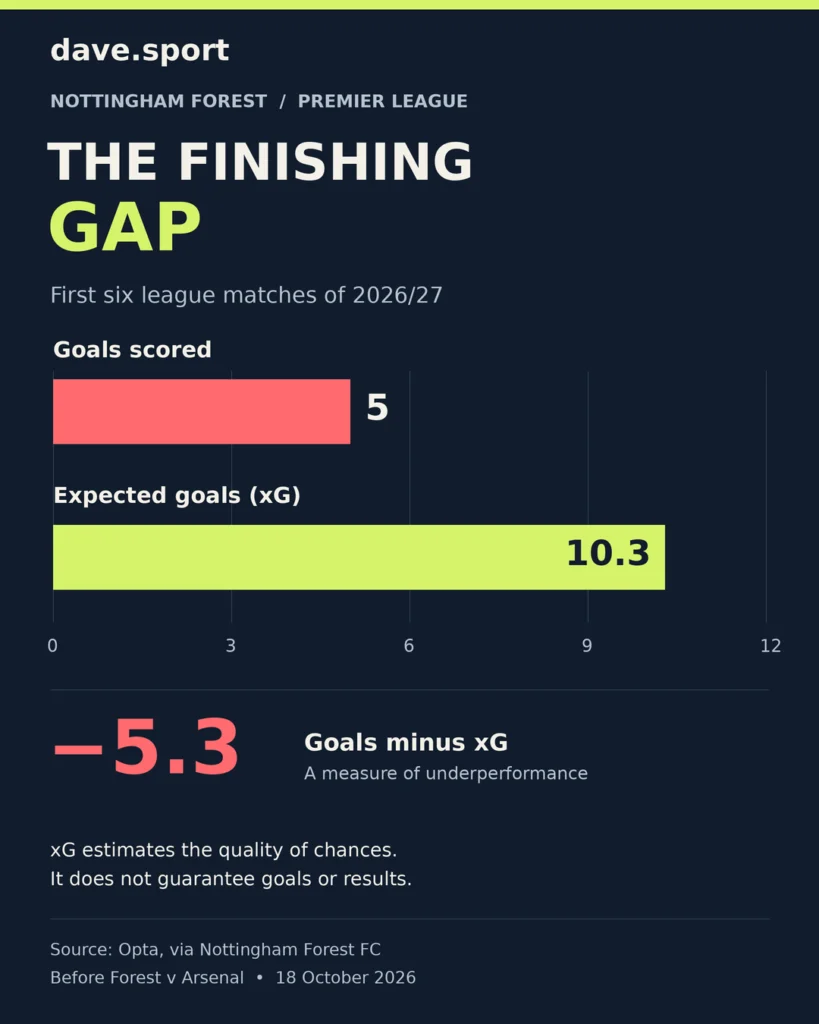
Five goals from 10.3 expected goals
Forest’s official preview, using Opta’s figures, puts their scoring shortfall at 5.3 goals: five scored from 10.3 expected goals across six league matches. Their shot conversion rate is 4.7 per cent.
Their averages for shots, expected goals, opposition-box touches and big chances are their highest across the past five Premier League seasons.
Those figures strengthen the case for persisting with the attacking work. They also make the distinction between producing opportunities and taking them particularly important when judging the manager.
Expected goals measures the quality of chances. It cannot tell Forest when their finishing will improve, and it does not mean they are owed extra points.
Six matches are also a small sample. The encouraging test now is whether they can keep finding good shooting positions while opponents adjust, rather than treating the current numbers as a promise of better results.
Why the Palace defeat exposed both problems
Glasner’s return to Selhurst Park showed how Forest could look dangerous and still lose convincingly.
Dan Ndoye scored in the third minute. Walter Benítez subsequently denied him again, then made a remarkable recovery save from Liam Delap after Morgan Gibbs-White hit the bar.
Palace’s own match report acknowledged Forest’s superior first-half chances. Yet Daichi Kamada equalised and Jefferson Lerma headed Palace ahead from a corner before the interval. Yéremy Pino added the third after the break.
That sequence matters. Better finishing might have given Forest a cushion, but their defending still allowed the match to turn against them. An attack that misses chances needs a defence capable of keeping the contest manageable.
Our Crystal Palace–Forest player ratings gave Gibbs-White the visitors’ highest mark. There were individual positives, but the collective response after taking the lead was insufficient.
The lesson for Arsenal is practical: Forest must retain enough protection when they attack and defend set pieces properly. A promising spell has limited value if the opposition can undo it in a few minutes.
The City Ground problem predates Glasner
Sky Sports’ figures show Forest have won only one of their past 14 home league games. This season, their first three have produced 48 shots, seven on target and no goals.
Glasner inherited part of that record. He is now responsible for improving it, but another managerial change would not automatically resolve a problem stretching across several regimes.
His response in training has included asking Chris Wood to address the squad about finishing. Glasner told Sky Sports the striker’s message was: “Never lose your confidence in your ability.”
That is sensible reassurance. It needs to be accompanied by better execution when the next opportunity arrives.
Gibbs-White’s fitness could change the argument
The immediate complication is the possible loss of the player doing most to supply Forest’s chances.
Before this weekend, Gibbs-White led the Premier League for chances created from open play, with 15, according to the figures in Forest’s preview.
Glasner said on Friday that the midfielder had missed team training after suffering a minor muscle problem at Palace. His availability depended on how he responded to individual work and a planned return to training.
That leaves him doubtful, rather than definitely unavailable. It also makes his fitness central to Sunday’s assessment: if he cannot play, others must take responsibility for connecting midfield with the attack.
Nikola Milenkovic is also a doubt after returning to training. Nicolo Savona and Igor Jesus remain out, with our report on Jesus’ injury explaining the setback to Forest’s attacking options.
Our predicted Forest and Arsenal line-ups include a provisional selection for Gibbs-White. They are predictions, not confirmed teams.
A manager hired for stability needs measurable progress
Forest appointed Glasner on 6 July as their fifth head coach in less than a year. He arrived with an FA Cup and a Conference League title from his time at Palace.
Evangelos Marinakis presented the appointment as part of an ambition to challenge for honours. Glasner, in turn, spoke about the trust placed in him and the potential within the squad.
That background explains why the opening results feel so disappointing. Forest recruited a manager with evidence of building a successful team, then quickly found themselves discussing familiar problems.
It should also shape how his work is assessed. A club cannot repeatedly ask a new coach to establish a way of playing without allowing time for players to learn it.
Patience still needs evidence. Forest should be looking for sustained chance creation, fewer avoidable concessions and a side able to respond when a game becomes difficult. Those are more useful measures of progress than either a reassuring training-ground message or a single bad afternoon.
What would progress against Arsenal look like?
Dave.Sport’s view is that Glasner has enough encouragement in Forest’s attacking play to keep working with it. The priority is to make the team more reliable around that attack.
Against Arsenal, that means sensible decisions after losing possession, concentration at corners and enough composure to make good chances count. If Gibbs-White misses out, it also means sharing the creative responsibility.
Forest do not need to turn Sunday into a frantic attempt to settle every question about their manager. They need to stay competitive long enough for their attacking quality to matter.
Kick-off is 4.30pm BST on Sunday 18 October at the City Ground. Our Forest–Arsenal TV guide has the coverage details.
Glasner has evidence that his team can create. His next task is to give supporters evidence they can trust it to compete for points.
Related
Brian Brobbey signs new Sunderland contract until 2031 as striker targets more after European breakthrough
Human
Newcastle struggle for answers as Carragher warns of tough season after another Everton defeat
Human
Premier League winners and losers: Brighton make history as Arsenal go clear and Man Utd slide
Human
Alexander Isak penalty appeal: Liverpool denied spot-kick after Jurrien Timber shirt-pull in Arsenal defeat
Human
Liverpool vs Arsenal: Kai Havertz seals 1–0 win as Gunners end long wait for Anfield victory
Human