 Premier League
 Championship
 EFL One & Two
 Scottish Premiership
 WSL
 Champions League
 Europa League
 FA Cup
 Carabao Cup
 Arsenal News
 Aston Villa News
 Chelsea News
 Liverpool News
 Man City News
 Man Utd News
 Newcastle News
 Tottenham News
 Premiership Rugby
 URC
 Six Nations
 Nations Championship
 Bath
 Leicester Tigers
 Saracens
 Northampton Saints
 Harlequins
 Bristol Bears
 Leinster
 Munster
 Glasgow Warriors
 Cardiff

Ayyoub Bouaddi and Iliman Ndiaye give Maresca a decision after PSG defeat
Ayyoub Bouaddi and Iliman Ndiaye gave Manchester City something useful to take from their 4-2 defeat by Paris Saint-Germain: evidence that Enzo Maresca has alternatives capable of changing…
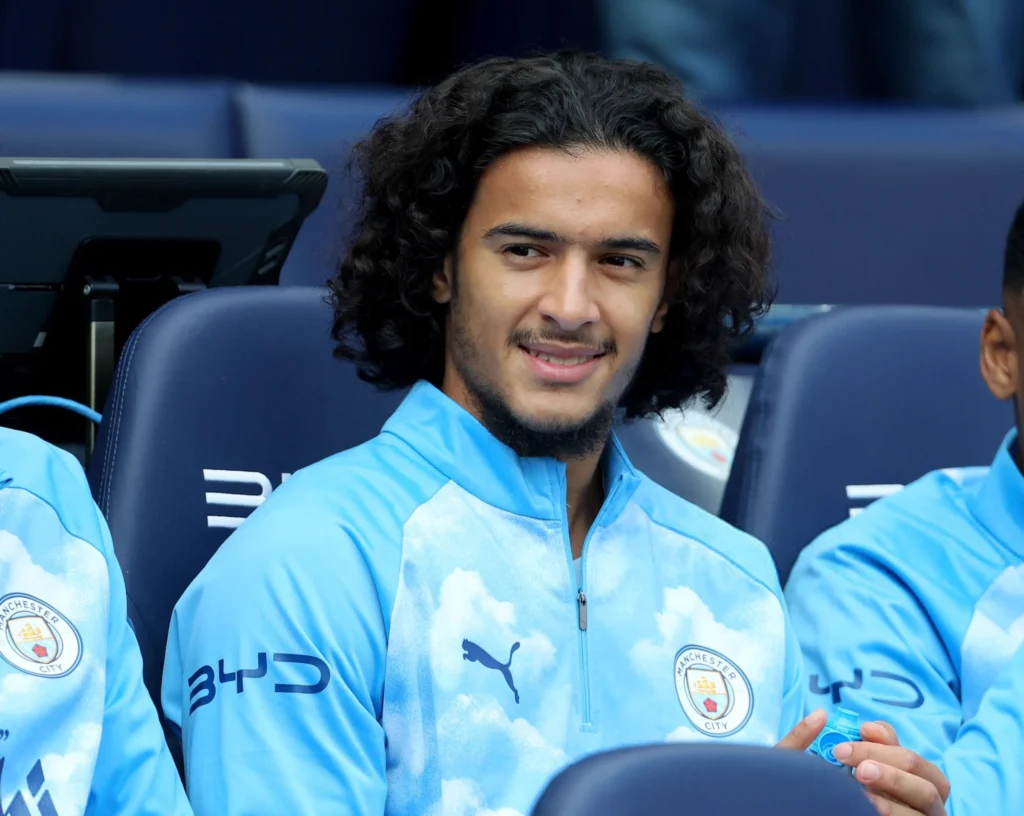
Ayyoub Bouaddi and Iliman Ndiaye gave Manchester City something useful to take from their 4-2 defeat by Paris Saint-Germain: evidence that Enzo Maresca has alternatives capable of changing a difficult game.
Both arrived at half-time with City three goals behind. Both supplied an assist for Erling Haaland. Their contributions helped turn a damaging evening into a contest, although the result also exposed the limits of an attacking recovery.
For Maresca, the selection question before Ipswich Town is whether those performances deserve a place in his starting side. The broader challenge is making City competitive for the full match.
Our Manchester City vs PSG match report covers how the visitors established the lead that ultimately decided Wednesday’s game.
What Maresca changed at half-time
Maresca introduced Bouaddi for Rayan Cherki, Ndiaye for Jérémy Doku and Matheus Nunes for Rúben Dias.
That was a substantial intervention, affecting City’s defence, midfield and attack at once. It also makes it difficult to attribute the improvement to one player alone.
The manager’s explanation focused on how City responded to conceding twice in quick succession.
“In two minutes you concede two goals and we lost a bit of balance, distance between players,” Maresca said in his post-match assessment on City’s website.
That diagnosis matters. City needed to recover the connections between their players as well as increase their attacking urgency. Sending on fresh legs could help, but the response also depended on those already on the pitch.
Ayyoub Bouaddi’s contribution went beyond his assist
Bouaddi provided the low delivery for Haaland’s second goal in the 75th minute. Later, another cross from the midfielder found the striker close to goal, only for Matvei Safonov to make the save.
Those two moments strengthen his case for more responsibility. He helped create opportunities that put Haaland in position to finish, rather than simply adding another passing option.
Hayters’ live coverage recorded both chances, including the late opportunity that could have brought City within one goal.
Ndiaye’s impact was similarly direct. He threatened Safonov himself before crossing for Haaland’s first goal in the 53rd minute. His ability to become a shooting threat and then a provider gave PSG different problems to solve.
Both substitutes earned positive assessments in our Man City player ratings against PSG. Their performances provide a reasonable basis for a selection debate, even if one half cannot settle the longer-term hierarchy.
The numbers show a response, with an important qualification
City registered 21 of their 27 attempts after half-time. That supports the view that their improvement produced sustained attacking pressure.
FotMob’s match statistics show how much attacking work they generated overall:
| Full-match statistic | Manchester City | PSG |
|---|---|---|
| Shots | 27 | 15 |
| Expected goals | 2.57 | 1.83 |
| Touches in opposition box | 52 | 17 |
Those totals need to be read alongside the score. PSG had a three-goal advantage at the interval; City had to chase the game. The figures demonstrate the threat City eventually created, but cannot establish that the same approach would have worked identically from kick-off.
Why the defensive problem remains
PSG restored their three-goal cushion through Maghnes Akliouche after Haaland’s first goal. Later, Nunes conceded a penalty that Gianluigi Donnarumma saved from Ferran Torres. City’s attacking pressure therefore coexisted with further opportunities for the visitors.
Marc Guéhi’s assessment was particularly relevant. In his post-match interview, the defender accepted that City needed a stronger defensive foundation and could not keep relying on scoring five or six to win.
The implication for Maresca is that promoting the substitutes would address only part of the problem. City also need to maintain their organisation after setbacks and protect themselves while committing players forward.
Bouaddi and Ndiaye have strengthened their arguments ahead of Saturday’s match against Ipswich. Whether either starts, City need their attacking influence to operate within a more reliable team performance.
Our Man City vs Ipswich TV and highlights guide has the details for the 3pm kick-off on 17 October.
Related
Arsenal player ratings: Gyokeres shines as Raya helps secure Slavia Prague win
Human
Arsenal beat Slavia Prague 2-1 as Gyökeres scores and assists in Prague
Data + AI
Manchester City player ratings: Haaland decisive as Ndiaye impresses in Leipzig win
Human
RB Leipzig 2-3 Man City: Haaland winner settles five-goal Champions League contest
Human
Liverpool player ratings vs Fenerbahce: Nyoni and Isak earn 7s as Jacquet struggles in 3-2 defeat
Human