 Premier League
 Championship
 EFL One & Two
 Scottish Premiership
 WSL
 Champions League
 Europa League
 FA Cup
 Carabao Cup
 Arsenal News
 Aston Villa News
 Chelsea News
 Liverpool News
 Man City News
 Man Utd News
 Newcastle News
 Tottenham News
 Premiership Rugby
 URC
 Six Nations
 Nations Championship
 Bath
 Leicester Tigers
 Saracens
 Northampton Saints
 Harlequins
 Bristol Bears
 Leinster
 Munster
 Glasgow Warriors
 Cardiff

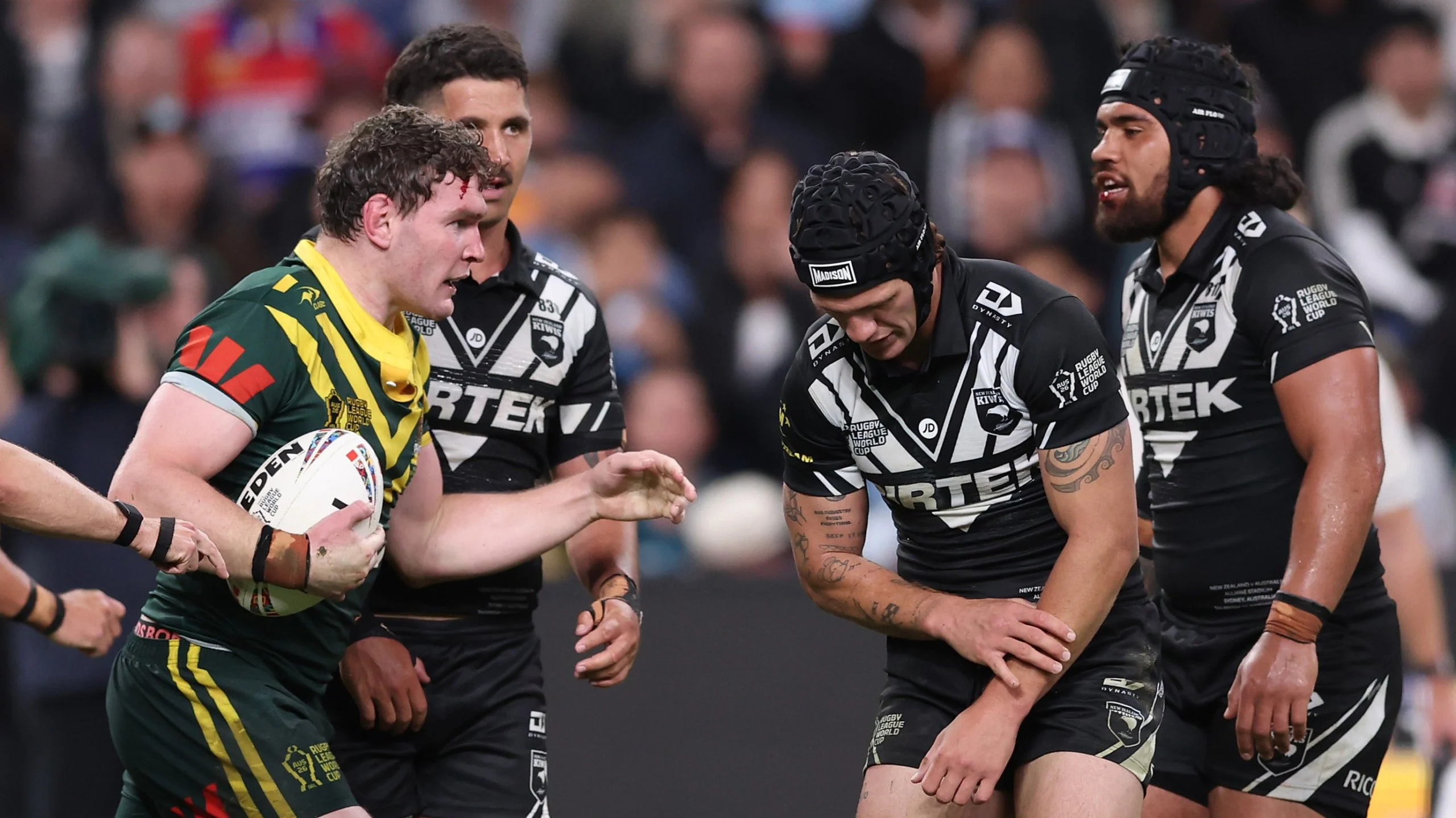
Ryan Hall’s legacy: the Leeds great whose value went far beyond scoring tries
Ryan Hall’s career offers plenty of obvious starting points: six Grand Final victories with Leeds, a match-winning Wembley performance and 39 tries for England.

Ryan Hall’s career offers plenty of obvious starting points: six Grand Final victories with Leeds, a match-winning Wembley performance and 39 tries for England.
There is another number worth remembering, though. In the 2024 Grand Final, playing for Hull KR against Wigan, Hall made 25 carries.
He did not score. Rovers lost. Yet his contribution that evening helps explain why his retirement at 38 marks the departure of a player whose importance extended well beyond the try-line.
Hall could supply the spectacular finish. He could also take responsibility for the difficult work that allowed somebody else to produce one.
Across two decades, different teams kept finding reasons to need him.
Ryan Hall’s work before the scoring opportunity
A winger’s scoring record is easy to understand. The value of carrying the ball away from your own line can take longer to appreciate.
In rugby league, those early carries help determine what the rest of a possession can become. A team struggling to escape its own end gives its playmakers fewer options and risks handing the opposition another favourable attacking position.
A winger who can absorb contact and gain ground helps change that equation.
That was a substantial part of Hall’s value. His strength offered a way forward when there was little space, and his willingness to keep taking the ball gave team-mates somewhere to turn.
The official Super League breakdown of the 2024 Grand Final credited him with a match-leading 177 metres from those 25 carries. It also highlighted his try-saving tackle on Jake Wardle.
That is a revealing snapshot of his game: repeated involvement with the ball, followed by a defensive intervention that helped keep his side in contention.
The scorebook alone could never capture all of that.
The Wembley performance that belongs in Leeds history
Hall’s reputation for doing the demanding work should not obscure how decisive he could be when trophies were available.
At Wembley in 2014, he scored twice as Leeds beat Castleford 23-10 to win the Challenge Cup. His performance earned him the Lance Todd Trophy as the final’s outstanding player.
The achievement carried particular weight for Leeds. It ended a 15-year wait to win the competition.
Contemporary coverage of the final records a day when Hall’s finishing helped turn a long-running ambition into silverware.
A year later came another defining intervention: his late try against Huddersfield secured the League Leaders’ Shield and kept Leeds on course for their 2015 treble.
Those moments demonstrate a distinction between accumulating impressive numbers and changing the outcome of a season.
Hall managed both. He supplied sustained production across league campaigns and delivered contributions that supporters could attach to a particular trophy, afternoon or celebration.
For a player sharing a dressing room with so many decorated figures, that individual place in the club’s history was earned.
Hull KR gave his career a second identity
It would be easy to organise Hall’s career around Leeds and treat everything else as an interval between his two spells.
Hull KR deserve considerably more space than that.
After two seasons with Sydney Roosters, Hall returned to Super League with the Robins in 2021. By 2024, he was helping them contest the Grand Final.
That chapter added a different kind of achievement. His experience now served a club seeking to establish itself among the competition’s leading sides.
Speaking to the Guardian before that final, Hall described the appeal of joining Rovers: “It was the human pull of this club that got me.”
His account of the move and the club’s progress underlined how strongly he connected with that project.
There is a useful lesson in that part of his career. Experience matters most when a player can still contribute on the field. Hall brought knowledge of major occasions, but he also brought the physical output required to reach them.
His Grand Final performance provided evidence of both.
What the try record actually tells us
Hall passed former Leeds team-mate Danny McGuire’s Super League try total in June 2024 while playing for Hull KR.
The milestone rewarded more than a productive season. It reflected a career spent repeatedly finding ways to finish chances, retain a place and remain effective.
Longevity can sound passive, as though a player simply stays around long enough for the numbers to rise.
At this level, selection has to be earned again. Younger players emerge, coaches change and the physical demands continue.
Hall’s record therefore carries two stories at once: his ability to score and his ability to remain useful over an unusually long period.
His England return of 39 tries adds another measure. International rugby brought different combinations and opponents, yet he continued to produce.
Comparisons between great wingers will always involve judgement. Trophies, finishing, defensive reliability and carrying all deserve consideration. Hall’s career gives him a substantial claim in each conversation.
Returning to Leeds with something left to offer
Hall’s return to Headingley for 2025 created an appealing ending, but it also posed a practical question: what could he still give Leeds?
The club’s announcement of his homecoming set out a playing role alongside a future position in its commercial department.
He subsequently extended his playing career through 2026.
When that extension was announced, Brad Arthur highlighted Hall’s daily standards, describing him as “a complete professional”.
That assessment explains why an experienced player can matter beyond his own match statistics. Younger team-mates see preparation, consistency and the habits required to keep competing.
Reputation may secure attention. Continuing to meet those standards makes the example credible.
How Hall should be remembered
The highlights will rightly feature Wembley, title celebrations and the finishes that made him one of his generation’s outstanding wingers.
His career also deserves to be remembered through the less glamorous possessions: the carry taken deep in his own half, the ground gained against an organised defence and the tackle required after a long spell of work.
For Leeds, Hull KR and England, those actions were part of the same package as the tries.
Hall leaves a career that can be celebrated through individual moments and understood through sustained contribution. The trophies explain how much he won. The work between them explains why teams kept trusting him.
Related
Scotland vs New Zealand preview: Graham boost as Scots chase historic All Blacks win at Murrayfield
Human
England vs Ireland Wheelchair World Cup: brothers Jack Brown and Joe Calcott face off for top spot
Human
Tara Jones handed Rugby League World Cup semi-final four years after playing in England’s last-four defeat
Human
Samoa promote Fanua Rimoni for first Women’s Rugby League World Cup semi-final against New Zealand
Human
Reece Walsh gets Australia full-back nod ahead of James Tedesco for World Cup semi-final against Samoa
Human