 Premier League
 Championship
 EFL One & Two
 Scottish Premiership
 WSL
 Champions League
 Europa League
 FA Cup
 Carabao Cup
 Arsenal News
 Aston Villa News
 Chelsea News
 Liverpool News
 Man City News
 Man Utd News
 Newcastle News
 Tottenham News
 Premiership Rugby
 URC
 Six Nations
 Nations Championship
 Bath
 Leicester Tigers
 Saracens
 Northampton Saints
 Harlequins
 Bristol Bears
 Leinster
 Munster
 Glasgow Warriors
 Cardiff

Pedro’s career: The forward who kept delivering on the biggest occasions
Pedro scored the opening goal in a Champions League final, started a World Cup final and helped Chelsea become champions of England.
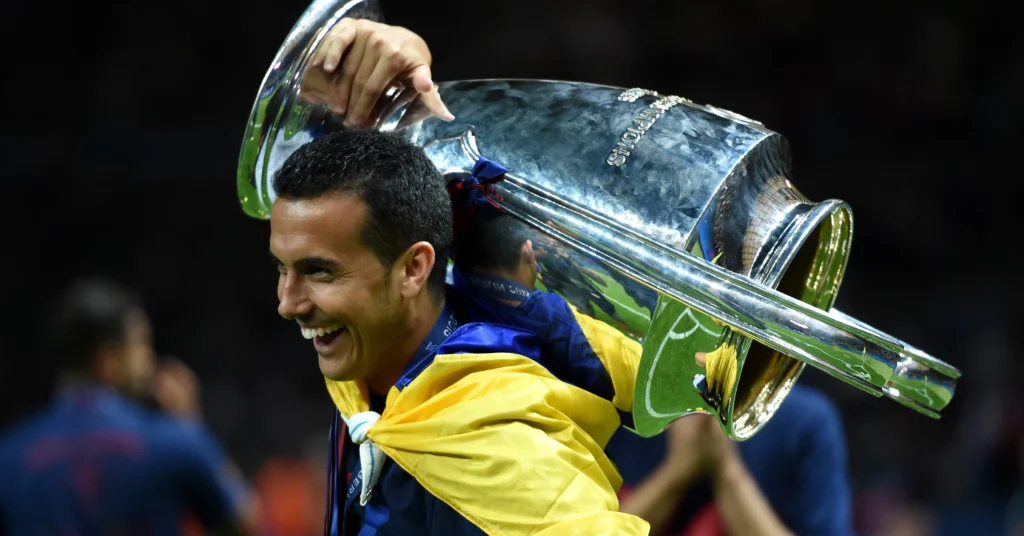
Pedro scored the opening goal in a Champions League final, started a World Cup final and helped Chelsea become champions of England.
Those achievements offer a useful starting point for assessing a career that ended with his retirement announcement at 39 on Wednesday.
Playing alongside Lionel Messi, Eden Hazard and some of Spain’s finest midfielders could make it difficult to command the attention. Yet Pedro repeatedly earned responsibility in teams where the competition for places was formidable.
His value lay in combining the qualities those sides needed: movement, versatility and the ability to finish when an opportunity arrived.
Pedro’s career was built on more than medals
A trophy collection tells us which teams a player belonged to. Pedro’s goals provide a clearer picture of his contribution.
In 2009, he scored in all six competitions Barcelona contested, an achievement recorded in the club’s account of that remarkable year.
That included the winner against Shakhtar Donetsk in the UEFA Super Cup and an equaliser against Estudiantes in the Club World Cup final.
Two years later, he opened the scoring against Manchester United at Wembley as Barcelona won the Champions League final 3–1.
These were consequential interventions in matches that helped define an exceptional team. His place in that history rests on what he did on the pitch.
The value of having different ways to score
Barcelona’s own profile describes Pedro as a two-footed winger capable of playing as a striker.
That versatility matters because it gives an attacker more ways to complete a move. A defender cannot rely as confidently on showing him towards a weaker foot, while a first-time chance does not always require an extra touch.
Chelsea’s figures provide a striking illustration. Of his 43 goals for the club, 21 came with his left foot and 18 with his right.
For a player operating around other prominent attackers, that efficiency is valuable. He does not need every move to be built around him to make the decisive contribution.
Pedro could become the destination for an attack while others attracted attention earlier in it.
Chelsea showed his game could travel
His move to England in 2015 tested those qualities in different surroundings.
Pedro scored and assisted on his debut against West Bromwich Albion. The more substantial evidence came during Chelsea’s 2016–17 title campaign, when he regularly joined Hazard and Diego Costa in Antonio Conte’s attack.
Chelsea’s official retrospective records 13 goals and 12 assists across that season.
His contribution included goals against Manchester United and Tottenham during Chelsea’s 13-match winning league run, followed by his long-range strike at Everton during the run-in.
Those moments help explain why his Chelsea years deserve their own place in his career story. Success in Spain was followed by meaningful contributions to another championship side.
Another European final, another goal
Pedro added a different European trophy with Chelsea in 2019.
His goal in the 4–1 Europa League final victory over Arsenal made him the first player to score in finals of the European Cup or Champions League, UEFA Cup or Europa League, and UEFA Super Cup, according to UEFA.
Before that final, he had told UEFA in an interview: “You can get bored of many things, but never winning.”
It is an apt line to revisit at retirement.
Pedro’s career offers a reminder that great attacking teams need players who understand how to work alongside their leading creators and can finish the opportunities that partnership produces.
From Barcelona to Chelsea, and on the international stage with Spain, he earned that trust. His goals in the matches that mattered explain why.
Follow all the latest: Football live: Premier League 2026/27 news, transfers and updates.
Related
Aston Villa player ratings vs Barcelona: Jackson offers resistance as Emery’s side suffer first European defeat
Human
Barcelona 3-0 Aston Villa: Raphinha double and Yamal strike end Emery’s perfect Champions League start
Human
Barcelona vs Aston Villa line-ups: Buendía and Gomes start as Emery makes two changes at Camp Nou
Human
Manchester United vs Roma line-ups: Mainoo and Heaven start as Carrick makes two changes
Human
Barcelona vs Aston Villa preview: Emery challenges unbeaten Villa to prove themselves at Camp Nou
Human