 Premier League
 Championship
 EFL One & Two
 Scottish Premiership
 WSL
 Champions League
 Europa League
 FA Cup
 Carabao Cup
 Arsenal News
 Aston Villa News
 Chelsea News
 Liverpool News
 Man City News
 Man Utd News
 Newcastle News
 Tottenham News
 Premiership Rugby
 URC
 Six Nations
 Nations Championship
 Bath
 Leicester Tigers
 Saracens
 Northampton Saints
 Harlequins
 Bristol Bears
 Leinster
 Munster
 Glasgow Warriors
 Cardiff

Nottingham Forest create enough to beat Ipswich but their problems go beyond Liam Delap’s finishing
Nottingham Forest’s 1-1 draw at Ipswich offered Oliver Glasner evidence that his attack can create chances. It also showed why improving the supply to Liam Delap will not,…
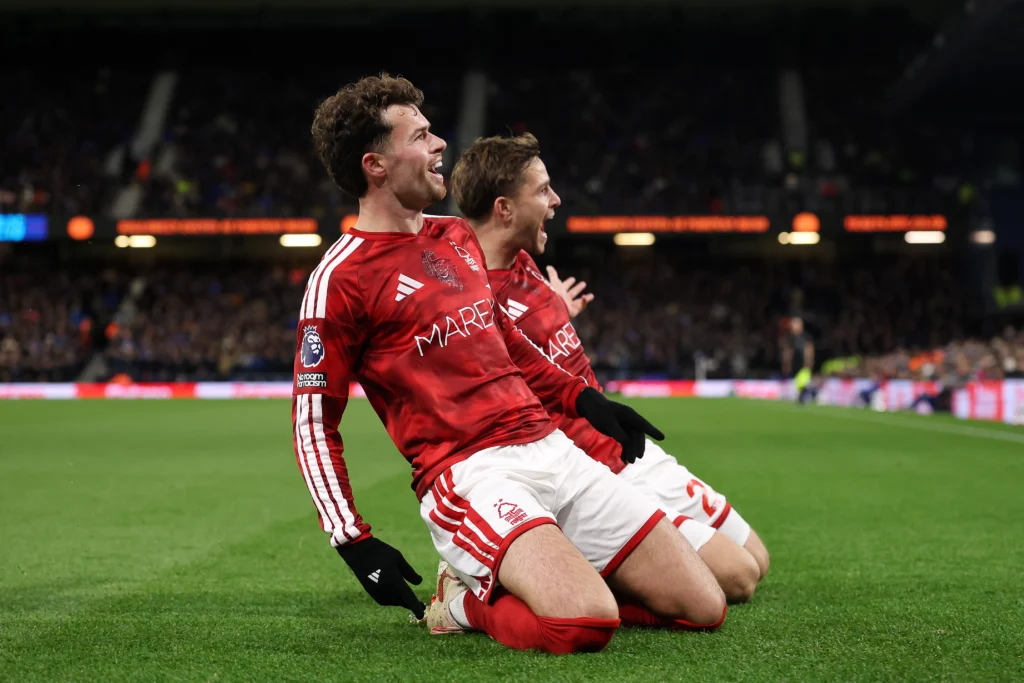
Nottingham Forest’s 1-1 draw at Ipswich offered Oliver Glasner evidence that his attack can create chances. It also showed why improving the supply to Liam Delap will not, on its own, turn performances into wins.
Forest finished with 17 attempts and 2.31 expected goals, according to Sky Sports’ match statistics. They scored once. At the other end, a defensive mistake allowed Julio Enciso to cancel out Neco Williams’ opener.
The frustration was familiar. The attacking evidence deserves a closer look.
Forest found more than speculative shots
Our pre-match analysis of Delap and Forest’s chance creation questioned whether their shooting totals were disguising the difficulty of the opportunities they were making.
At Portman Road, there were clearer openings.
| Measure | Ipswich | Nottingham Forest |
|---|---|---|
| Shots | 7 | 17 |
| Shots on target | 3 | 5 |
| Expected goals | 0.46 | 2.31 |
| Big chances missed | 1 | 3 |
Source: Sky Sports.
Expected goals estimates the quality of shooting opportunities; it does not award points or establish what a score should have been. Even so, the figures support a more encouraging assessment of Forest’s attacking threat than the result alone suggests.
The opening goal provided a useful example. As detailed in 101 Great Goals’ match report, Delap held the ball up, Morgan Gibbs-White released Daniel Muñoz and Williams finished the delivery at the far post.
That sequence matters because Forest did not need their centre-forward to provide the final touch. Delap helped connect the attack, Gibbs-White supplied the pass and the wing-backs combined to finish it.
It is a route to goal worth preserving while Delap searches for his own breakthrough.
Delap’s misses were only part of the story
Delap later headed over from a Muñoz cross and sent a shot from distance narrowly wide. Those were opportunities to change the result, but Forest’s other attackers also had chances.
Leif Davis cleared efforts from Gibbs-White and Dan Ndoye off the line, incidents covered in the same match report.
Those interventions complicate any verdict that Forest simply threw the game away through poor finishing. Ipswich’s defending helped determine the outcome. Reaching a dangerous position does not remove an opponent’s ability to recover.
There is still a distinction between the chances. A header sent over, a long-range effort and a shot cleared near the line should not all be treated as evidence of the same technical failing.
For Glasner, the useful response is to examine those decisions individually while retaining the combinations that produced them. Changing everything because the score stayed level would risk losing what worked.
The equaliser increased the pressure on the attack
Forest also made their task harder without the ball.
Sky Sports’ report identifies Nikola Milenkovic’s mistake as the opening for Enciso’s equaliser. Forest then needed another goal to regain a lead they had already earned.
That does not excuse the missed chances. It does mean the result cannot be explained entirely through Delap’s scoring record.
The draw at Portman Road left Forest with one league win from eight matches. Better attacking numbers provide something to work with, but supporters are entitled to judge progress by points as well.
One match is also too little evidence to declare the supply problem solved. Forest need to reproduce these openings against different opponents, rather than assume that a productive evening in the final third marks a permanent change.
Ipswich offered a more specific reason for encouragement: Forest found ways to threaten through their striker, their supporting attackers and their wing-backs. The next step is to repeat that work, finish more accurately and stop avoidable errors making every missed chance so expensive.
Related
Luke Humphries wins Players Championship 33 as Aspinall misses Finals
Data + AI
Osleys Iglesias vs Canelo Alvarez: Malignaggi says IBF champion is ‘too good and not popular enough’
Data + AI
Luke Littler retirement: Phil Taylor suggests world No 1 could quit ‘in five years’
Data + AI
Brian Brobbey signs new Sunderland contract until 2031 as striker targets more after European breakthrough
Human
Newcastle struggle for answers as Carragher warns of tough season after another Everton defeat
Human