 Premier League
 Championship
 EFL One & Two
 Scottish Premiership
 WSL
 Champions League
 Europa League
 FA Cup
 Carabao Cup
 Arsenal News
 Aston Villa News
 Chelsea News
 Liverpool News
 Man City News
 Man Utd News
 Newcastle News
 Tottenham News

 Premiership Rugby
 URC
 Six Nations
 Nations Championship
 Bath
 Leicester Tigers
 Saracens
 Northampton Saints
 Harlequins
 Bristol Bears
 Leinster
 Munster
 Glasgow Warriors
 Cardiff


Rugby League World Cup bench rules explained: why teams name six substitutes
The Rugby League World Cup bench rules allow teams to name six substitutes at the 2026 men’s tournament, but only four of those players can enter the game.
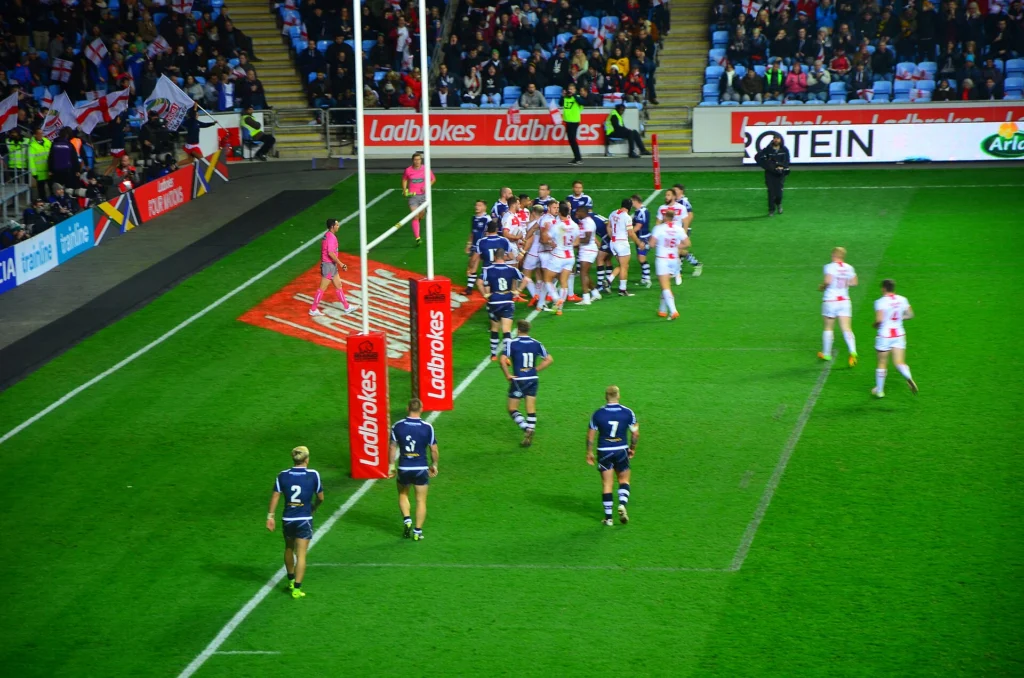
The Rugby League World Cup bench rules allow teams to name six substitutes at the 2026 men’s tournament, but only four of those players can enter the game.
That gives coaches more options when naming their side, while leaving an important decision to make during the match: which four replacements should they use?
The NRL’s official World Cup team lists confirm that the tournament follows the NRL interchange system.
What are the Rugby League World Cup bench rules?
Teams select 13 starters and six interchange players. They can introduce four different players from that bench, with a standard allowance of eight interchanges during the match.
The distinction is between the number of replacements available and the number of changes a team can make.
| Part of the team | Number |
|---|---|
| Starting players | 13 |
| Players named on the interchange bench | Six |
| Different bench players who can be used | Four |
| Standard interchange allowance | Eight |
The ARLC’s announcement of the 2026 rules sets out the four-player, eight-interchange limit.
A player can therefore come off and return later within the available interchange allowance. Using a fourth different substitute does not necessarily mean a team has exhausted its changes.
Why name six substitutes if only four can play?
The larger bench allows coaches to carry cover for different positions before deciding which players the match requires.
A coach might want extra forwards to maintain the physical intensity, but also a half-back or outside back in case the game demands a different approach.
The practical trade-off is timing. Introducing four replacements early settles which bench players can be used, reducing the options available later.
NRL coaches discussed that balance when the rule was introduced, identifying the choice between retaining injury cover and introducing a player who could change the contest.
How could England use the six-player bench?
England’s announced bench for Saturday’s opener against Tonga contains Jez Litten, Luke Thompson, Ethan Havard, Sam Walters, Jack Welsby and Matty Ashton.
Mikey Lewis is listed among the additional reserves, outside those six interchange players, as explained in our England team selection story. The RFL’s squad announcement confirms the distinction.
Head coach Brian McDermott has already highlighted the importance of delaying the final choice where possible.
“The main thing is you can’t be in a rush to select your fourth player because then, that’s your four locked in,” he said, as reported by Love Rugby League.
For viewers, that means a player remaining on the bench well into the second half may still be part of the coach’s plan.
When does the Rugby League World Cup start?
Australia face New Zealand in the men’s tournament opener at Allianz Stadium in Sydney on Thursday 15 October.
Kick-off is 10.05am UK time, with the match shown live on Premier Sports 2. Our Australia vs New Zealand TV and streaming guide explains how to watch.
England begin against Tonga in Perth on Saturday 17 October, also at 10.05am UK time.
Related
England vs Ireland Wheelchair World Cup: brothers Jack Brown and Joe Calcott face off for top spot
Human
Samoa promote Fanua Rimoni for first Women’s Rugby League World Cup semi-final against New Zealand
Human
Reece Walsh gets Australia full-back nod ahead of James Tedesco for World Cup semi-final against Samoa
Human
Kalyn Ponga handed World Cup comeback chance as New Zealand name squad for Tonga semi-final
Human
England Wheelchair vs USA: TV channel, live stream and UK start time as World Cup semi-final place beckons
Human