 Premier League
 Championship
 EFL One & Two
 Scottish Premiership
 WSL
 Champions League
 Europa League
 FA Cup
 Carabao Cup
 Arsenal News
 Aston Villa News
 Chelsea News
 Liverpool News
 Man City News
 Man Utd News
 Newcastle News
 Tottenham News
 Premiership Rugby
 URC
 Six Nations
 Nations Championship
 Bath
 Leicester Tigers
 Saracens
 Northampton Saints
 Harlequins
 Bristol Bears
 Leinster
 Munster
 Glasgow Warriors
 Cardiff

Mauricio Pochettino at Man Utd: who could benefit and what must change
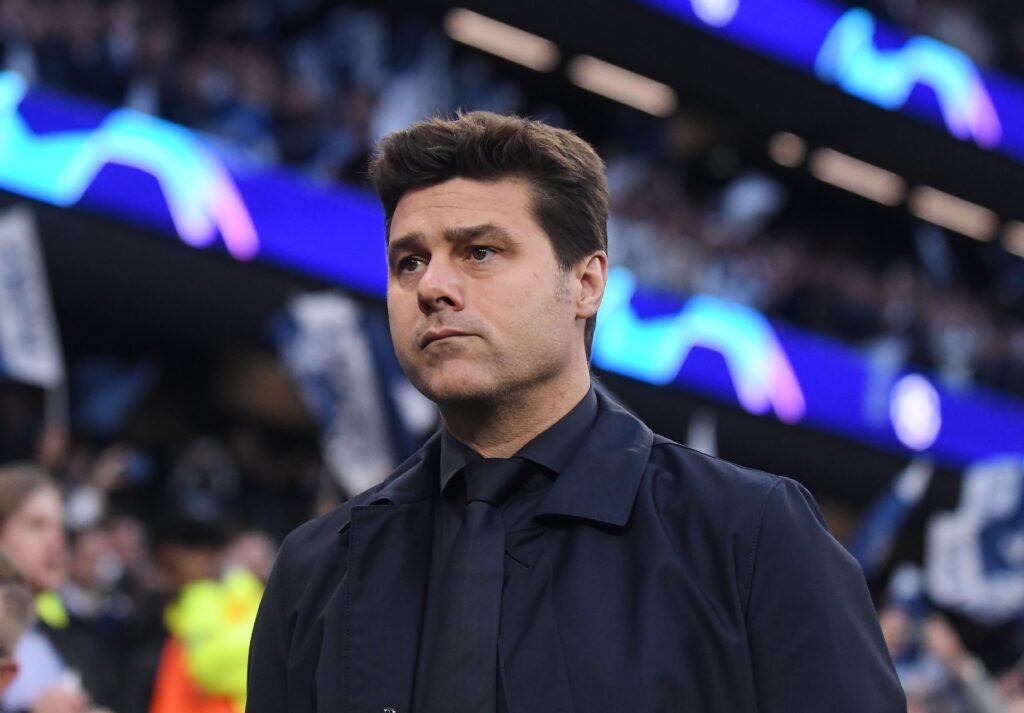
Mauricio Pochettino would inherit a Manchester United side capable of scoring four against Aston Villa and still failing to win. The strongest argument for appointing him is his ability to organise an ambitious team around a shared plan.
talkSPORT identifies the United States coach as a leading candidate should Michael Carrick leave. Our Carrick departure report covers the latest developments. Pochettino’s appointment remains hypothetical; his potential fit can already be assessed.
What Mauricio Pochettino could change without the ball
Pochettino’s reputation for attacking football has sometimes obscured the defensive strength of his best Tottenham side. Spurs conceded just 26 league goals in 2016–17, finishing second.
A Premier League tactical assessment describes narrow attacking positions that help close central passing routes when his teams press. The aim is to win possession where an opponent has limited ways out.
For United, the important change would be coordination. If a forward closes down, the midfield must move with him and the defence must judge whether to squeeze up. An isolated sprint leaves opponents space behind the first challenge. Getting those movements connected could reduce the number of difficult situations United’s defenders face.
Bruno and Cunha offer a starting point
United’s line-up against Villa included Bruno Fernandes behind Bryan Mbeumo, with Matheus Cunha and Amad alongside him. Kobbie Mainoo and Youri Tielemans started in midfield.
Pochettino has frequently used a 4-2-3-1, so he would have a familiar starting shape. One plausible approach would keep Fernandes between the lines, let Cunha move inside from the left and use Mbeumo to threaten space beyond the defence.
The benefit would depend on their timing: Fernandes needs runners ahead, while Cunha needs room to receive rather than another player occupying the same pocket. Mainoo could gain from closer passing support, but his partnership with Tielemans would also need clear responsibility for protecting the centre when attacks break down.
Full-back ambition would need protection
Patrick Dorgu could provide width if Cunha moved centrally. The risk would be the space behind him, especially if United’s other full-back advanced simultaneously.
Pochettino has shown he can adjust that balance. At Chelsea in April 2024, he moved Marc Cucurella into midfield in possession during the comeback at Villa.
The lesson for United is to establish who stays behind the attack. Keeping one full-back deeper, or bringing one inside alongside a midfielder, would be options to assess. Neither would remove the need for disciplined positioning when possession is lost
Chelsea supplies a warning as well as encouragement
Pochettino’s Chelsea finished 2023–24 with five successive league wins to reach sixth. That recovery showed he could improve a struggling side over time.
Yet Chelsea scored 77 league goals and conceded 63. His most recent club season therefore offers little basis for promising an immediate defensive cure.
United already demonstrated their attacking threat in the 4-4 draw with Villa. Any new coach would need to make that threat sustainable across a match. Asking a fragile side to press more aggressively before its support and cover are ready could make it easier to play through.
A longer-term case built on coaching
There is more recent evidence than his Tottenham years. U.S. Soccer’s August review records that the USA scored in all five of their 2026 World Cup matches. It also highlights opportunities for new internationals including Alex Freeman and Matt Freese.
That willingness to develop players would be relevant to United’s younger core. For Mainoo, Leny Yoro and Dorgu, regular roles and specific coaching could offer a route forward. Their improvement would still depend on performance and a functioning team around them.
Pochettino would bring a credible coaching plan. United would have to support it with recruitment and time, while he would have to adapt it to the players available. The first measure of success should be fewer exposed defenders and more repeatable attacking moves. Those changes would make his appointment meaningful.
Related
Sunderland vs Chelsea player ratings: Mukiele shines as Colwill struggles
Human
The Daily: Sunday 8 November 2026
Human
Fulham vs Newcastle player ratings: Murphy and Muniz shine in draw
Human
The Daily: Saturday 7 November 2026
Human
Thierno Barry reaches 10 goals as Everton striker passes last season’s total
Human